2025: human Nature | Linneaus Botanicus
-
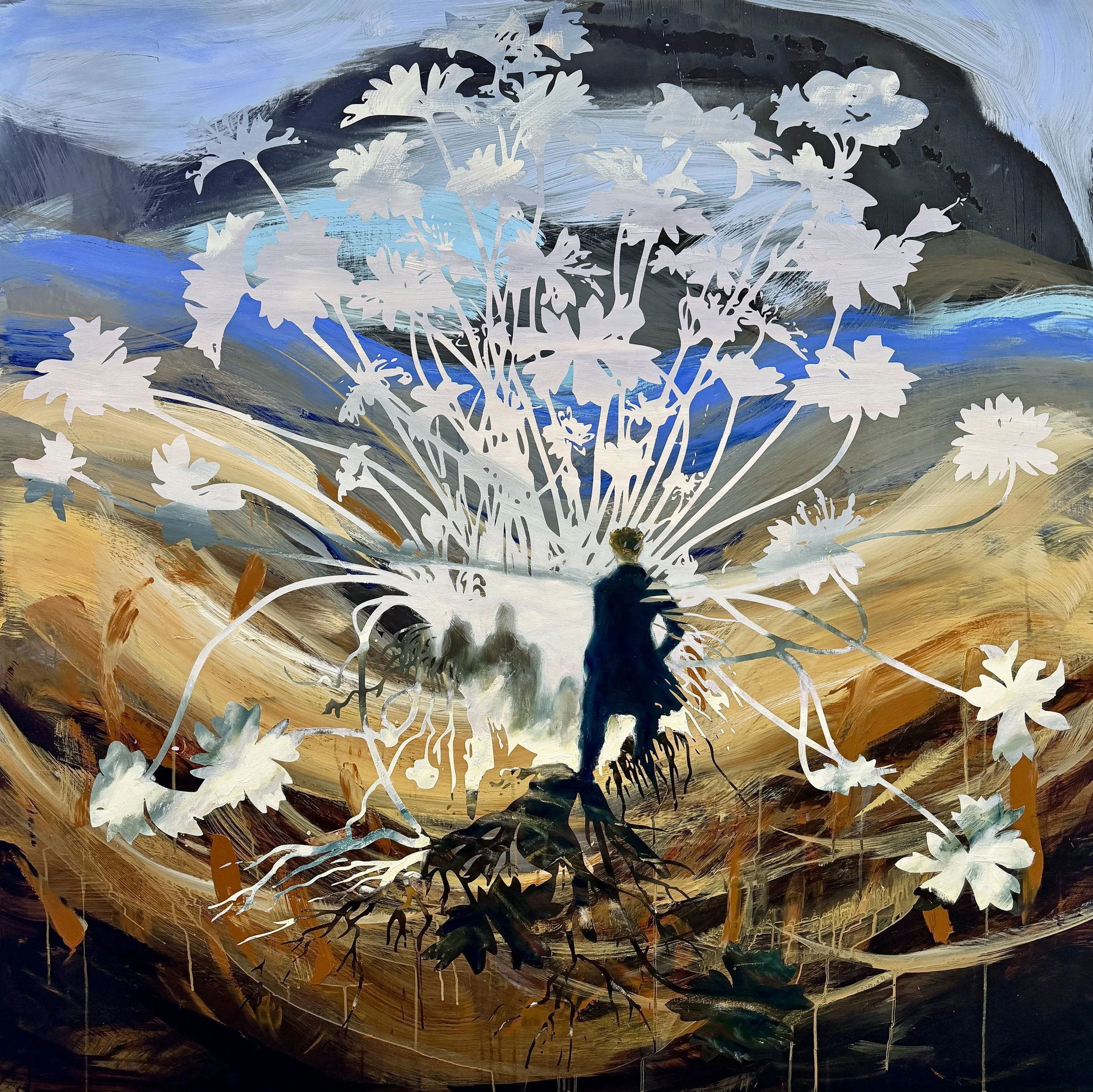
Winter Landscape Overtaken by “Geraniologia Historia” and Casper Friedrich’s “Wanderer Above Sea Fog”
Acrylic and oil on wood panel, 2026, 60” x 60”
-
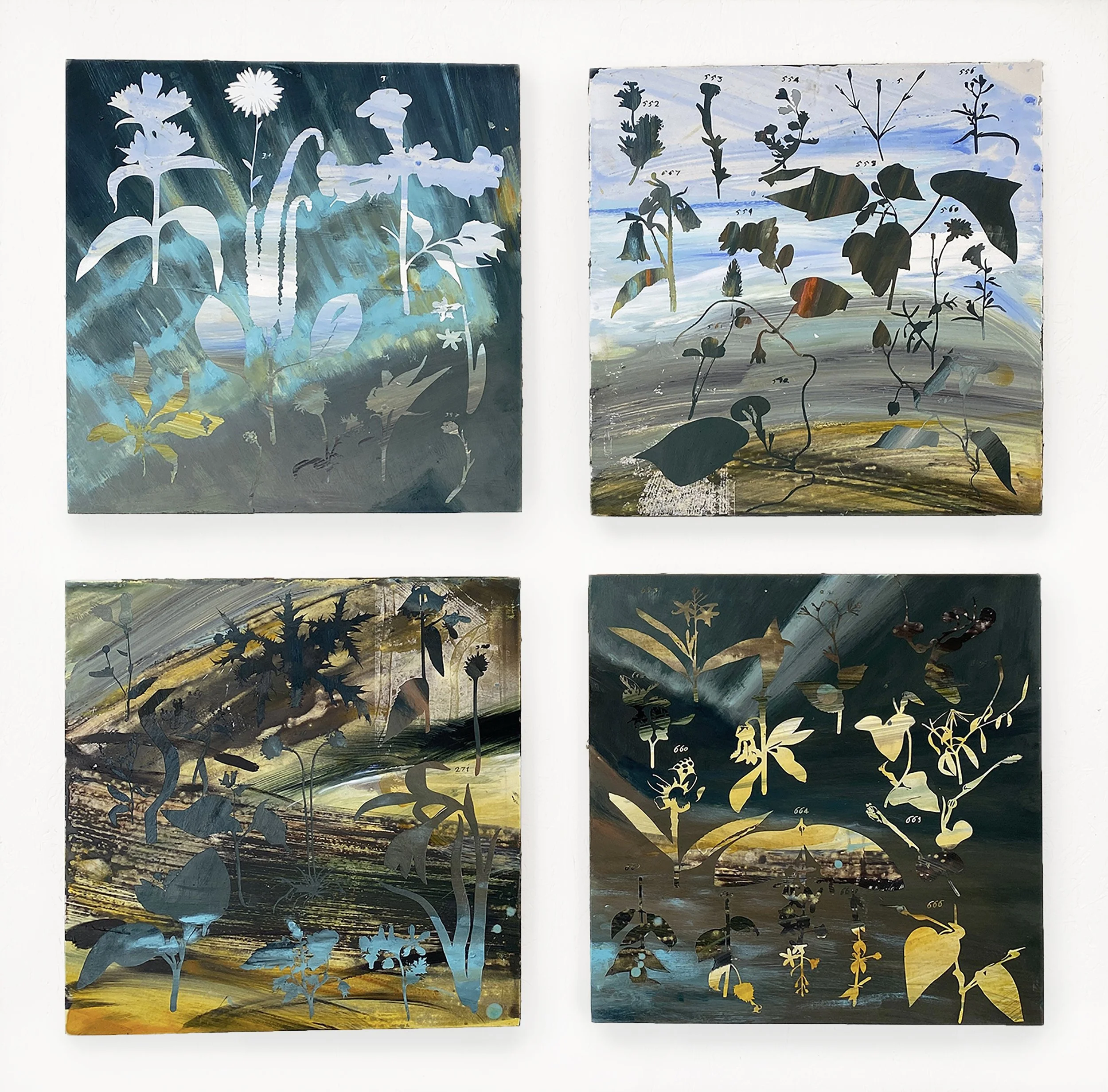
An Oak Spring Landscape Overtaken by "Blumen Pflanzen und Fruchte" by Franz Anton von Scheidl (1765-1770) and Frederic Church's "Aurora Borealis" (1865)
Acrylic and oil on gesso panels, quadriptych, 2025
Each panel 16” x 16”
-
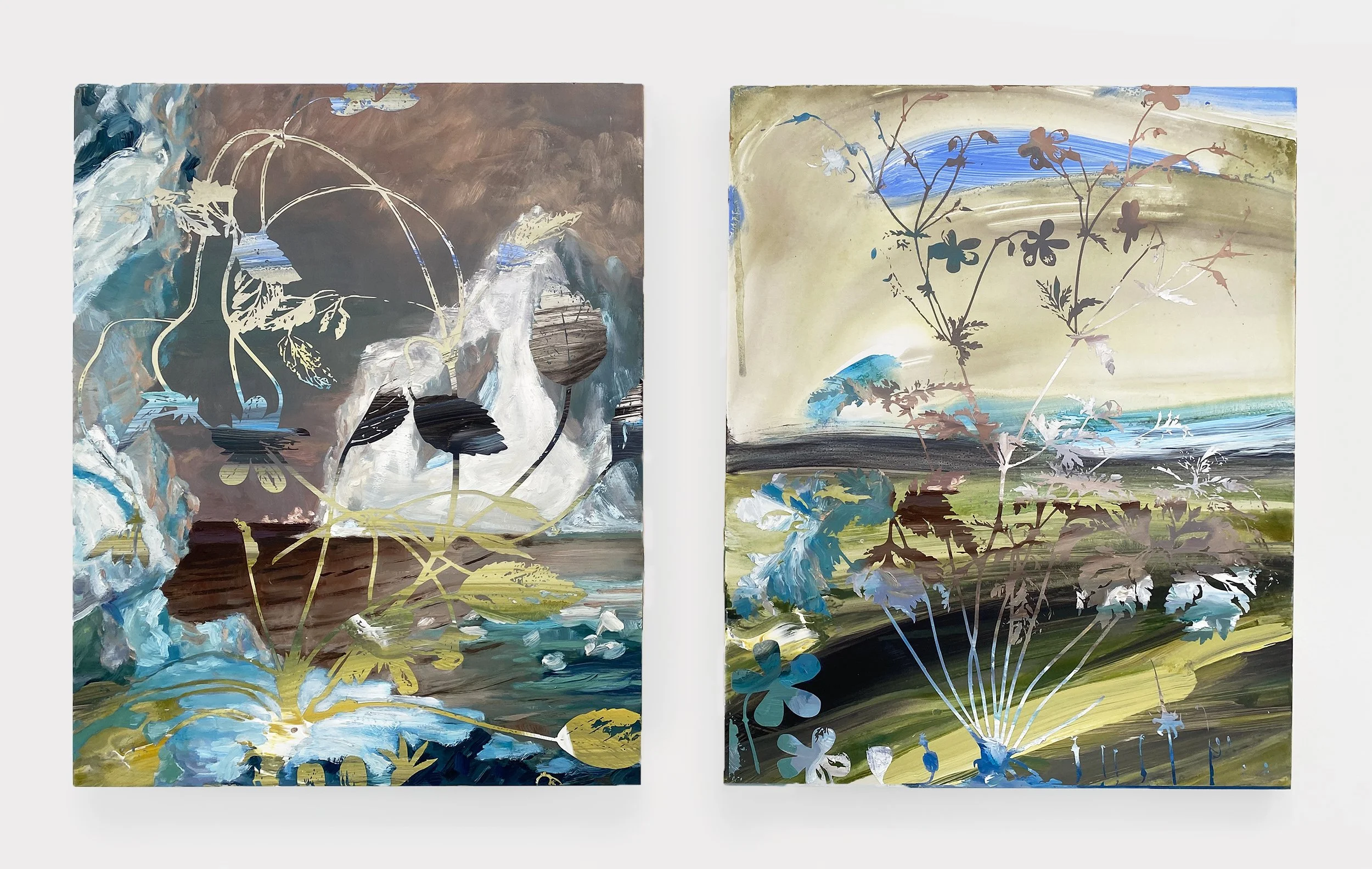
An Oak Spring Landscape on a Cloudy Day Overtaken by "Geraniologia" (1787-1788) and Frederic Church's "The Iceberg" (1861)
Acrylic and oil on gesso panels, diptych, 2025
Each panel 20” x 16”
-
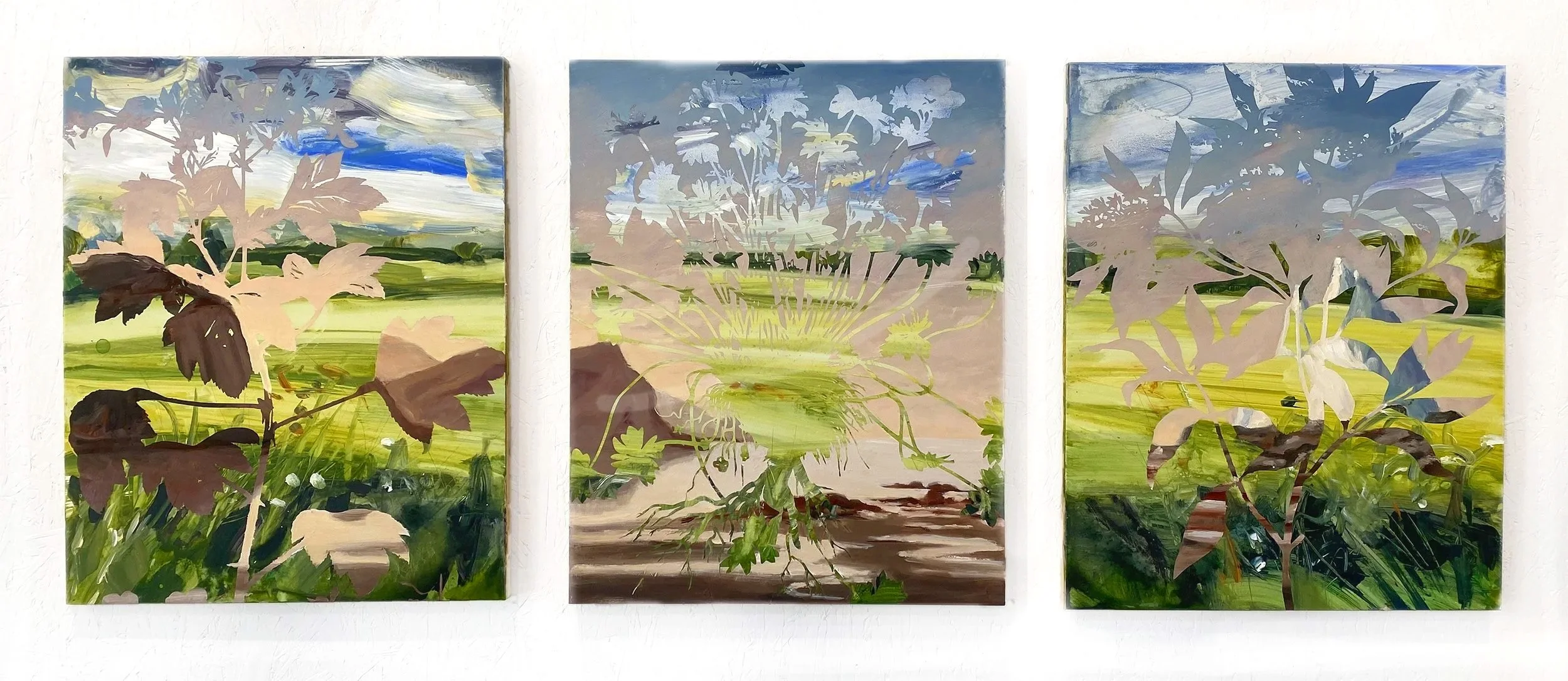
An Oak Spring Landscape on a Sunny Day Overtaken by "Geraniologia" (1787-1788) and "Coast of Labrador" by William Bradford (1868
Acrylic and oil on gesso panels, triptych, 2025
Each panel 20” x 16”
-
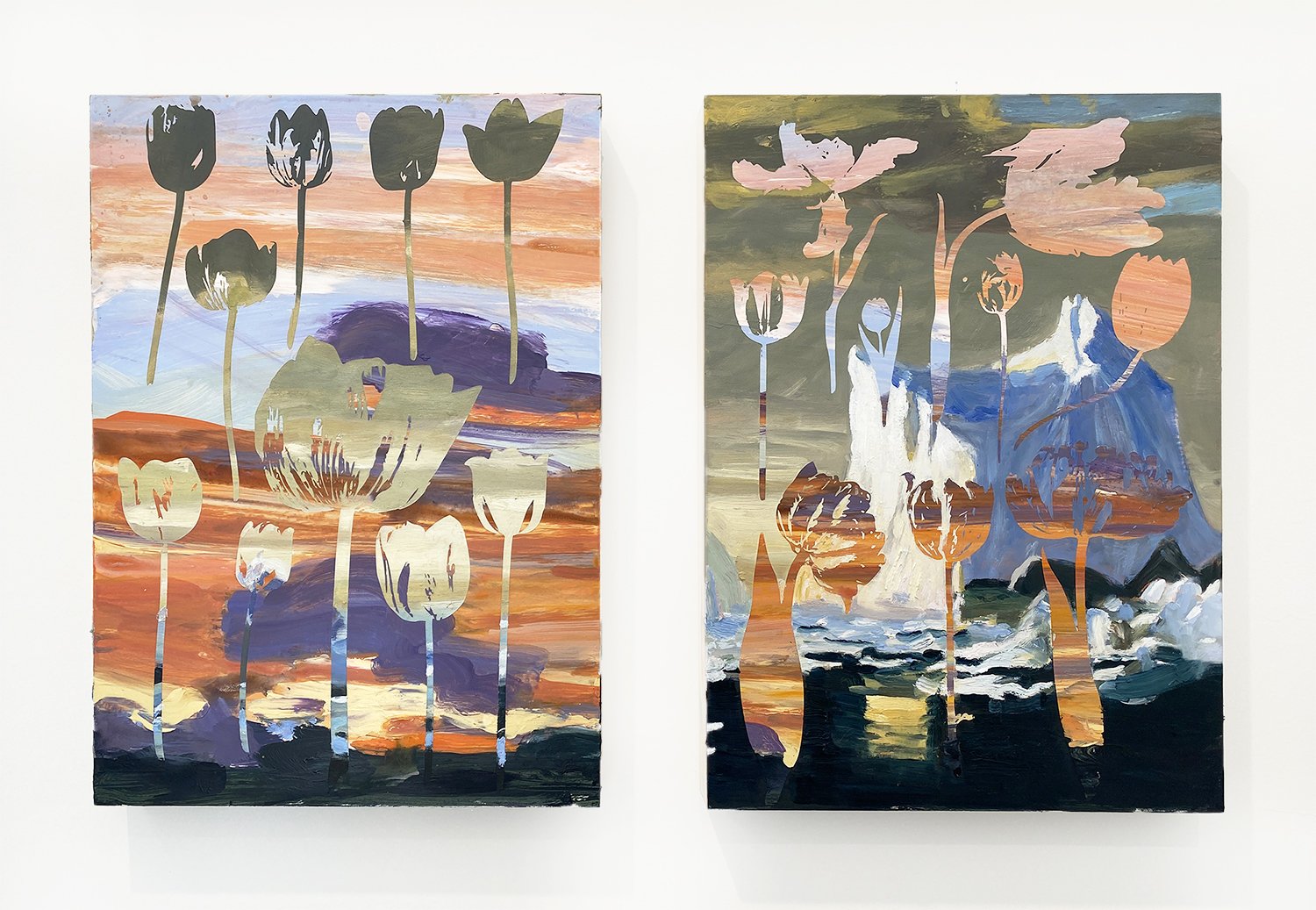
An Oak Spring Sunset Overtaken by "Blumen Pflanzen und Fruchte" by Anton von Scheidl (1765-1770) and William Bradford's "Iceberg in the Arctic" (1882)
Acrylic and oil on gesso panels, diptych, 2025
Each panel 16” x 12” x 1.5”
human Nature | Linnaeus Botanicus began during my residency at Oak Spring Garden Foundation in Upperville, VA, in 2025. Working with 18th‑century images from the foundation’s rare book library, I expanded my human Nature concept by substituting historic botanical illustrations for the chintz textile patterns I had used previously. The 18th century was the height of the Enlightenment and marked by a European hunger for knowledge and territorial expansion; the drive to catalog every known species reflects a prevailing belief in claiming and owning the natural world.
Carl Linnaeus was an 18th-century Swedish botanist, physician, and zoologist who developed the system of binomial nomenclature still used today to name and classify living organisms. His work, particularly the multi-volume Systema Naturae, established hierarchical categories—kingdom, class, order, genus, species—that brought order to biological diversity and laid foundations for modern taxonomy.
2025: human Nature | Entropic Systems
-
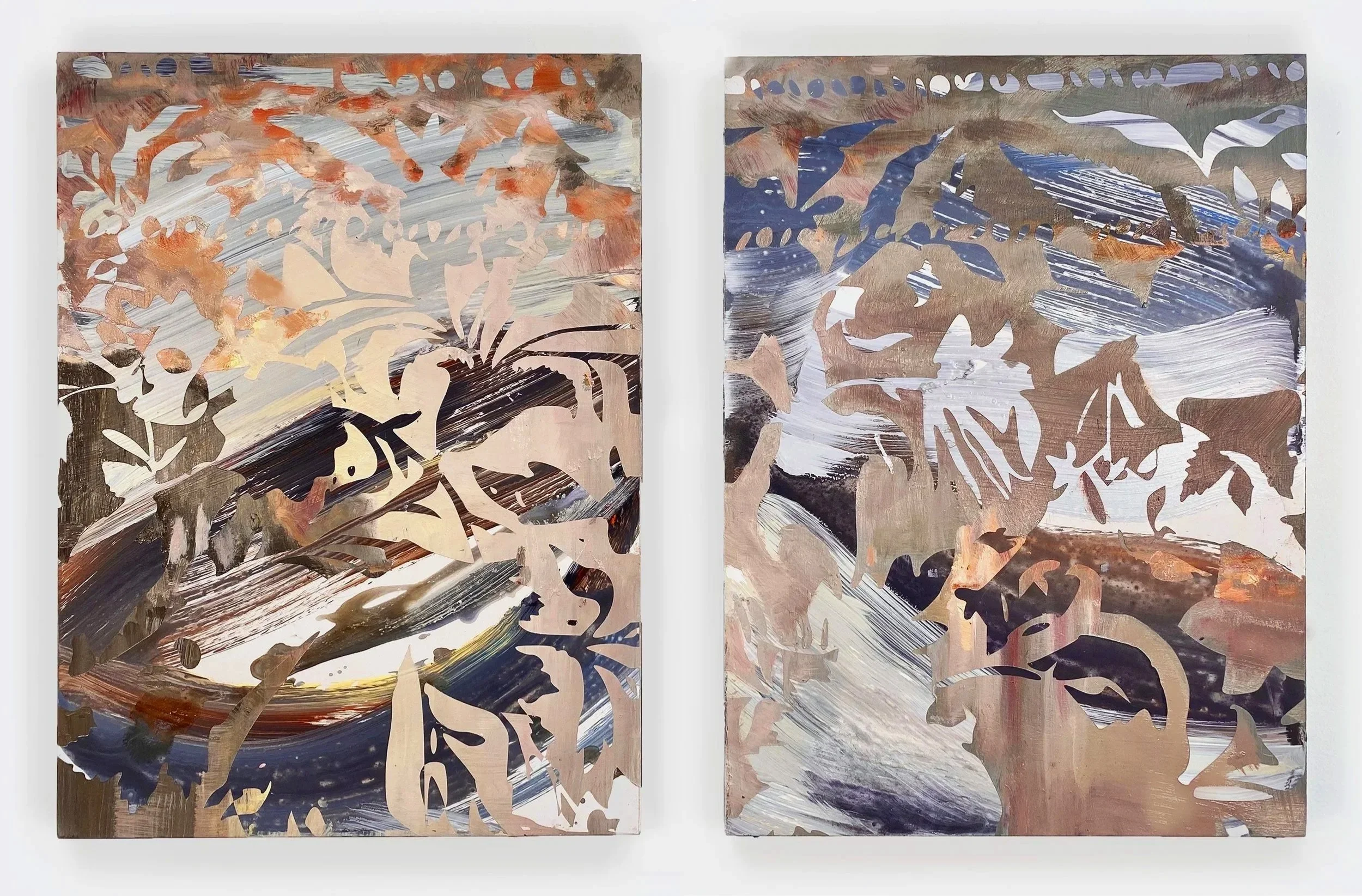
human Nature | Entropic Systems 3 A&B
acrylic and oil on gesso panels, diptych, each 16” x 12”
-
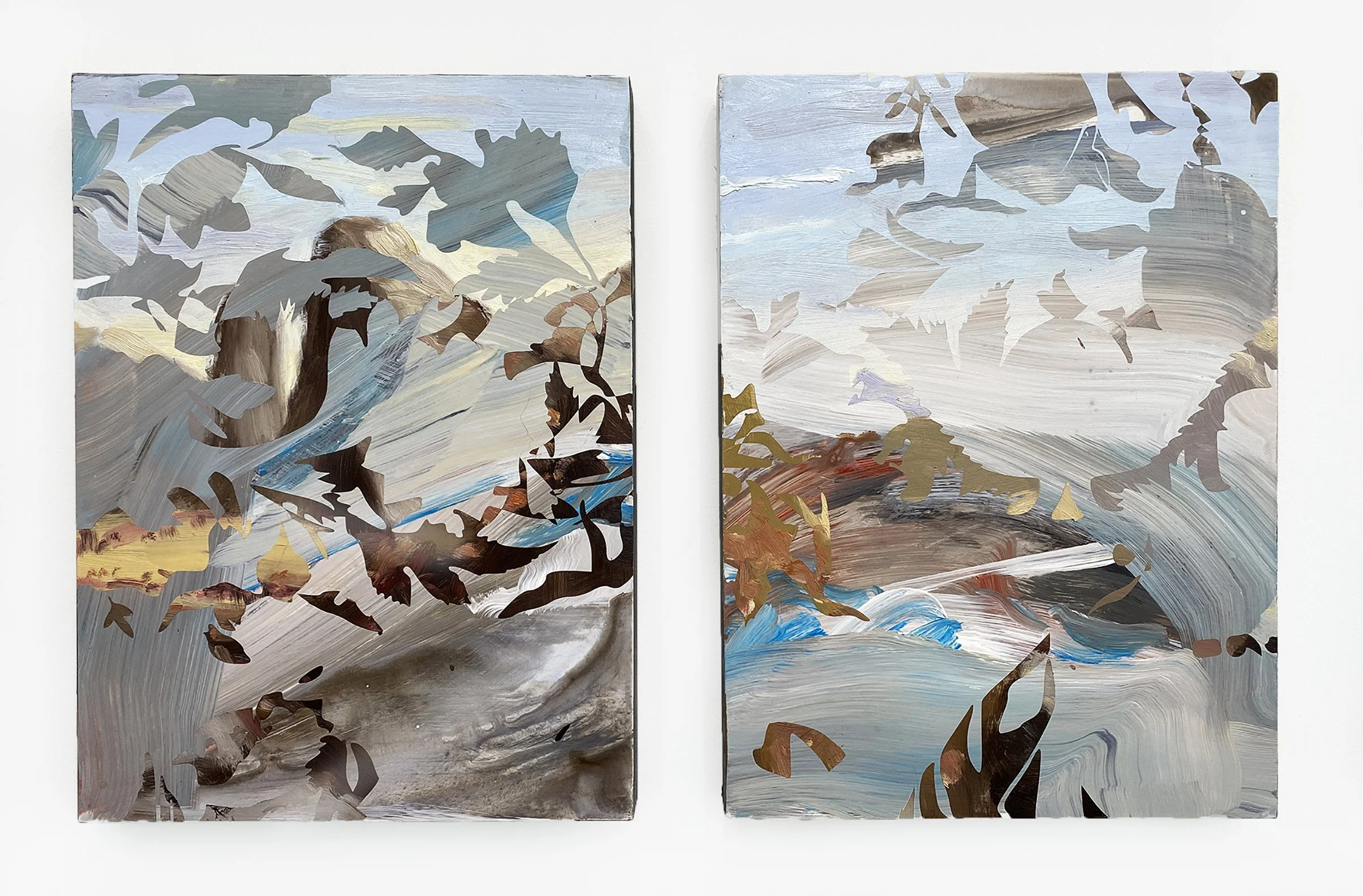
human Nature | Entropic Systems 1 A&B
acrylic and oil on gesso panels, diptych, each 16” x 12”
-
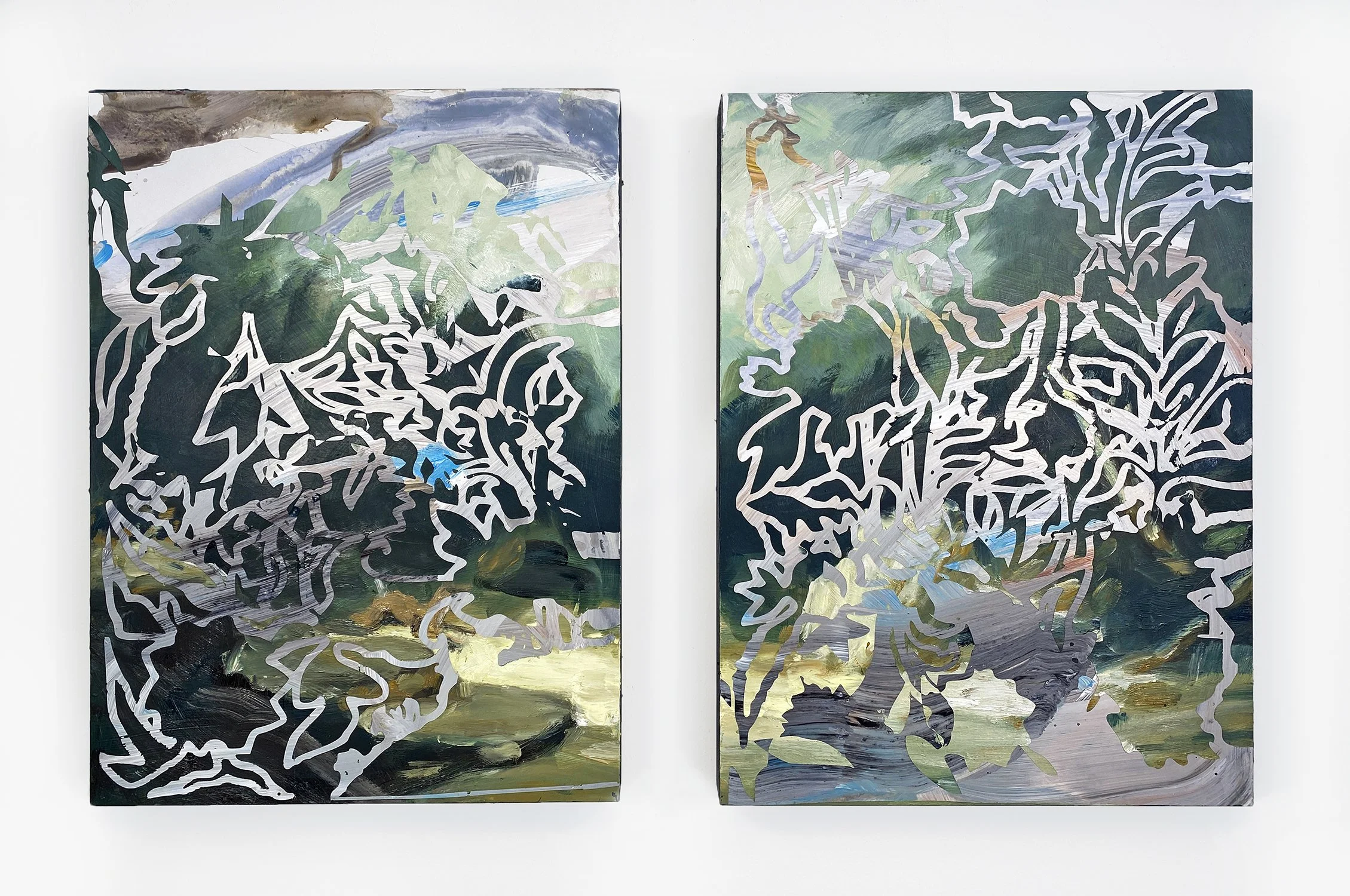
human Nature | Entropic Systems 4 A&B
acrylic and oil on gesso panels, diptych, each 16” x 12”
-
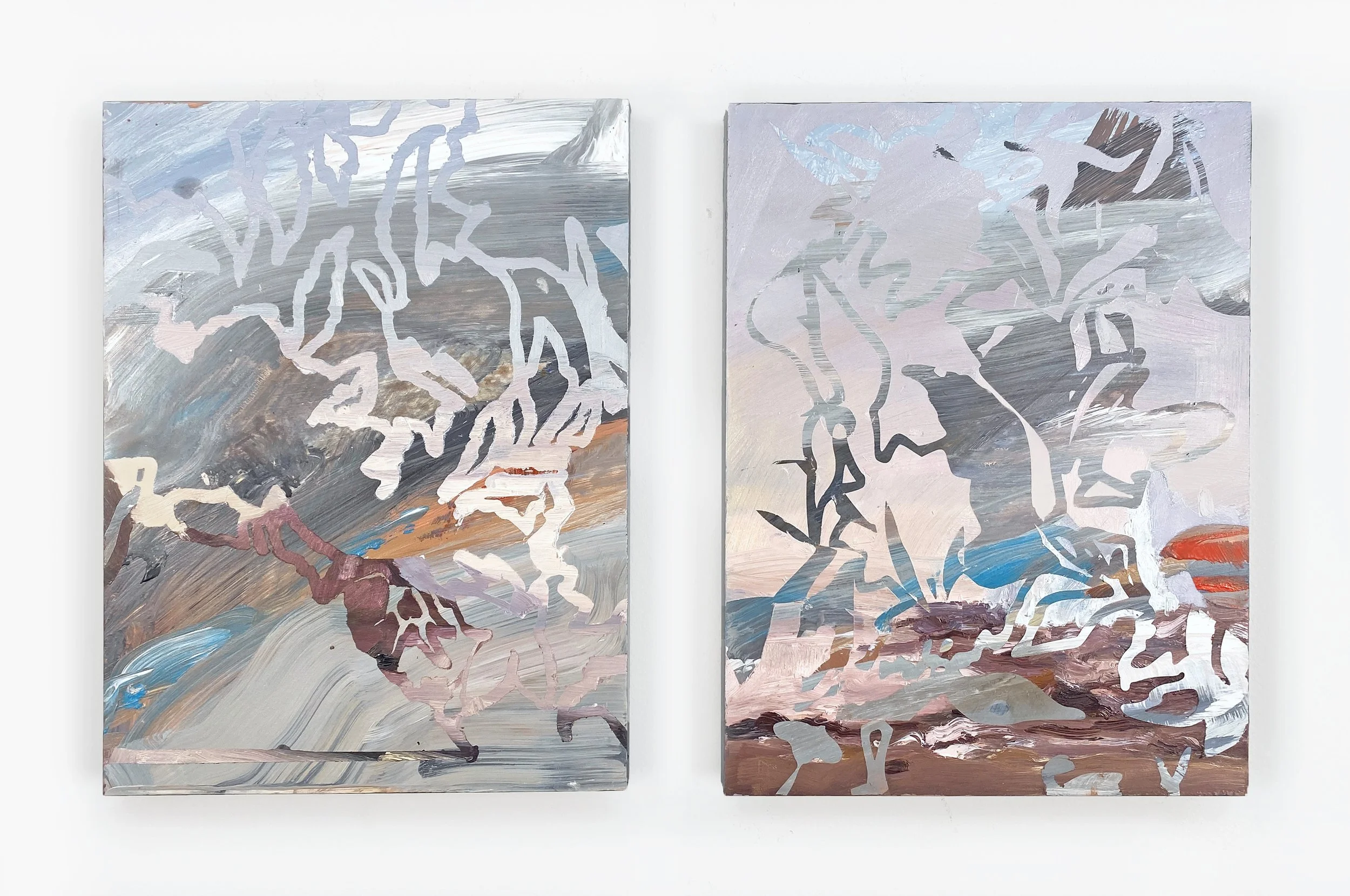
human Nature | Entropic Systems 2 A&B
acrylic and oil on gesso panels, diptych, each 12 × 9”
In human Nature | Entropic Systems I explore entropy—the thermodynamic idea that ordered systems inevitably break down. While wrestling with my stencil cutter to create patterns for the human Nature paintings, the machine repeatedly malfunctioned, leaving me with a growing archive of imperfect stencils. One day I noticed those “failures” were more compelling than the flawless versions. Delving into entropy, I came to see that imperfection is essential to emergence: without it, new forms and ideas could not arise. I am grateful to live in an imperfect world.
2024 - 2026: human Nature
-
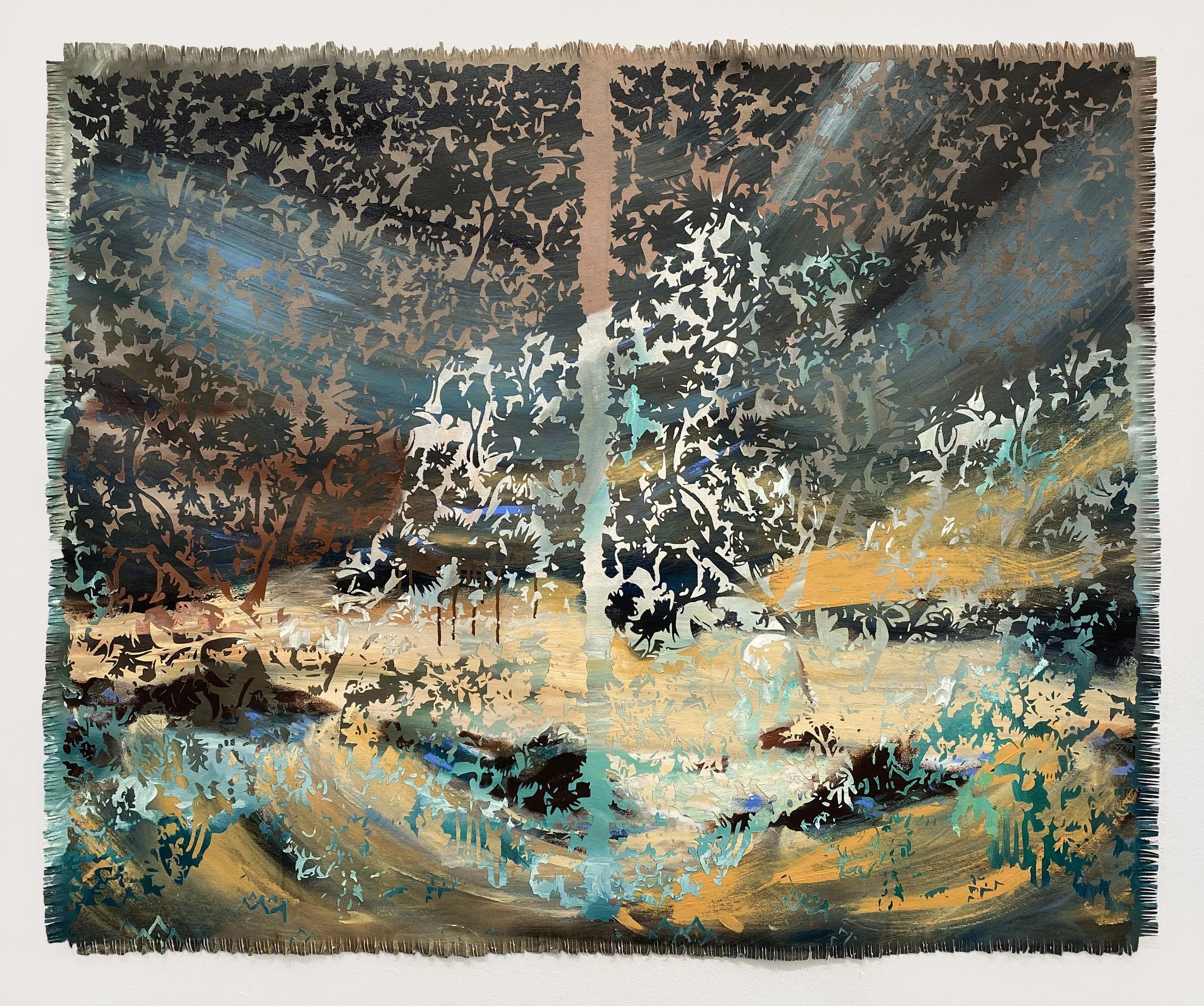
human Nature 27 | The Iceberg Cometh 5
acrylic and oil on canvas mounted on wood panel, 38” x 48”, 2026
-
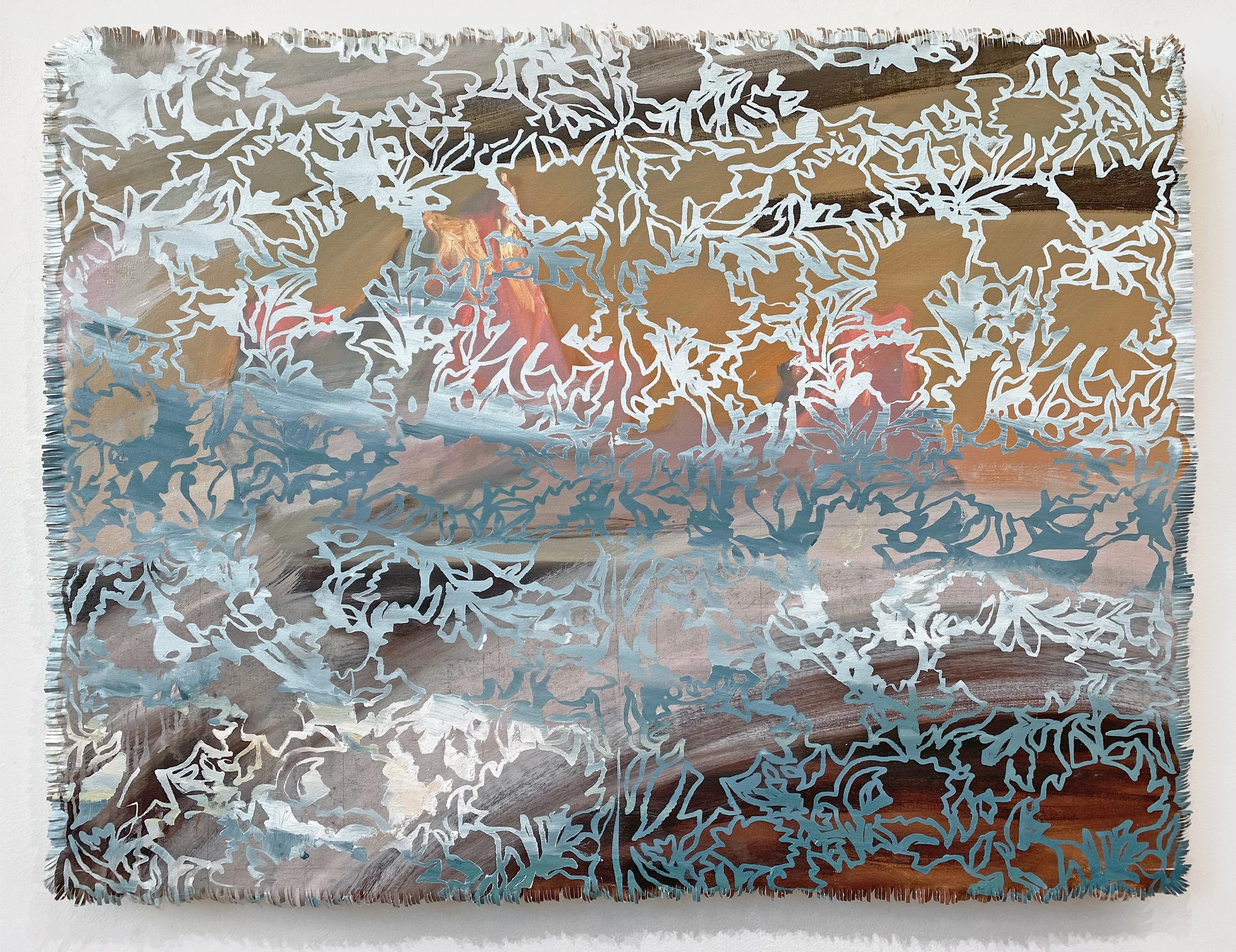
human Nature 30 | The Iceberg Cometh 6
Oil on linen mounted on wood panel, 38” x 47”, 2026
-
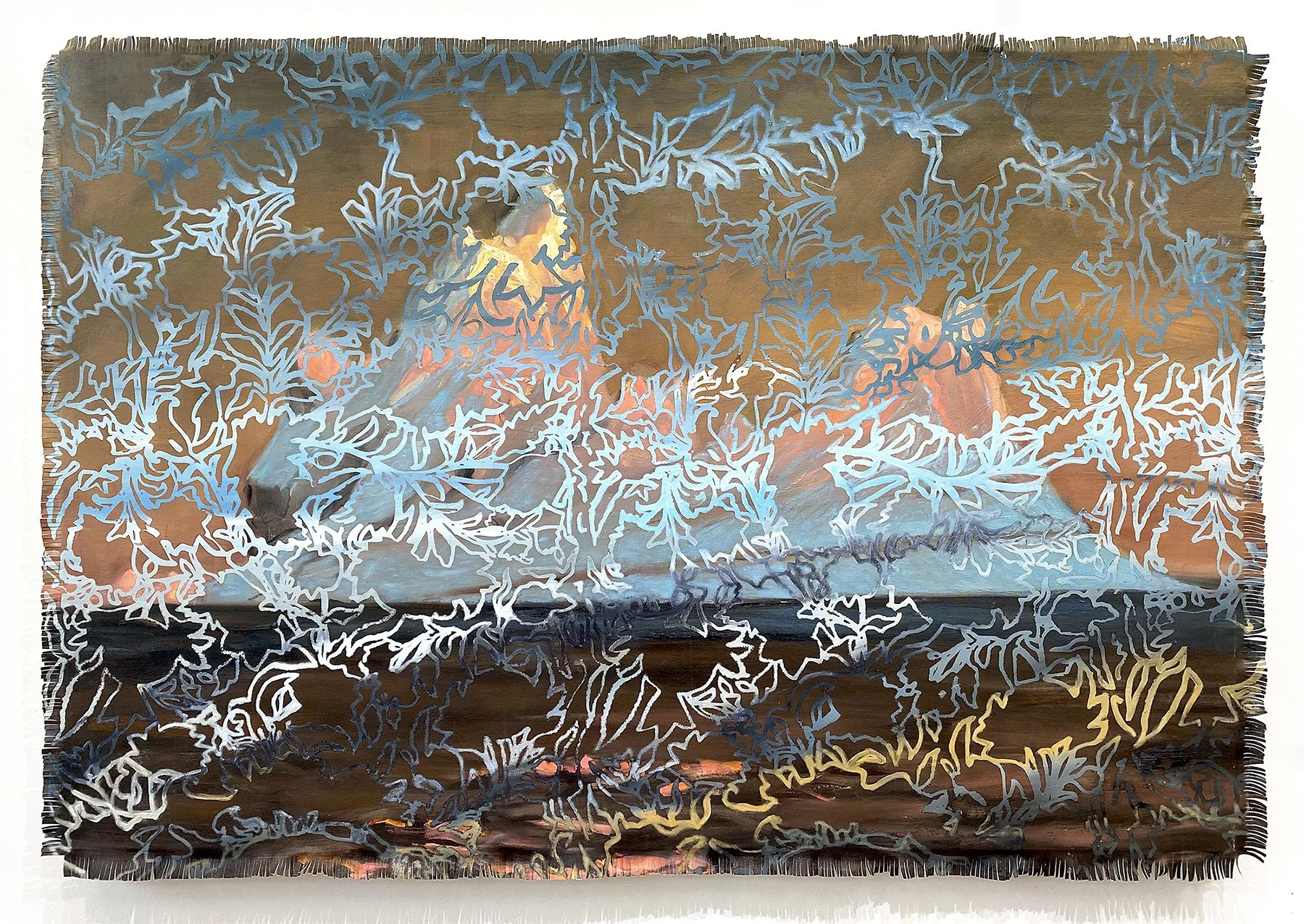
human Nature 26 | The Iceberg Cometh (after Frederic Church)
Oil on canvas mounted on wood panel, 36” x 52”, 2024
-
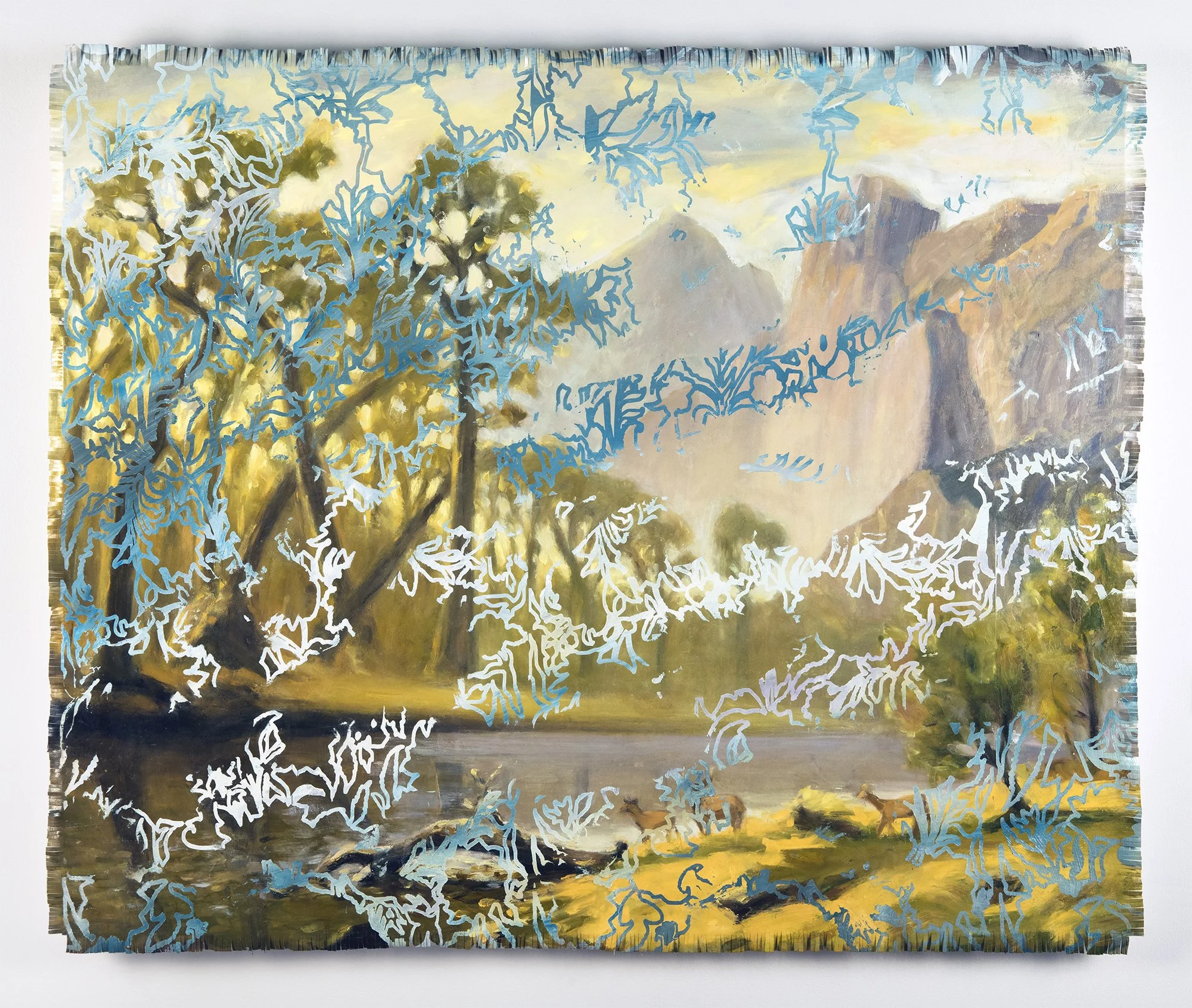
human Nature 25 (after Albert Bierstadt), oil on canvas mounted on wood panel, 44” x 54”, 2024
-
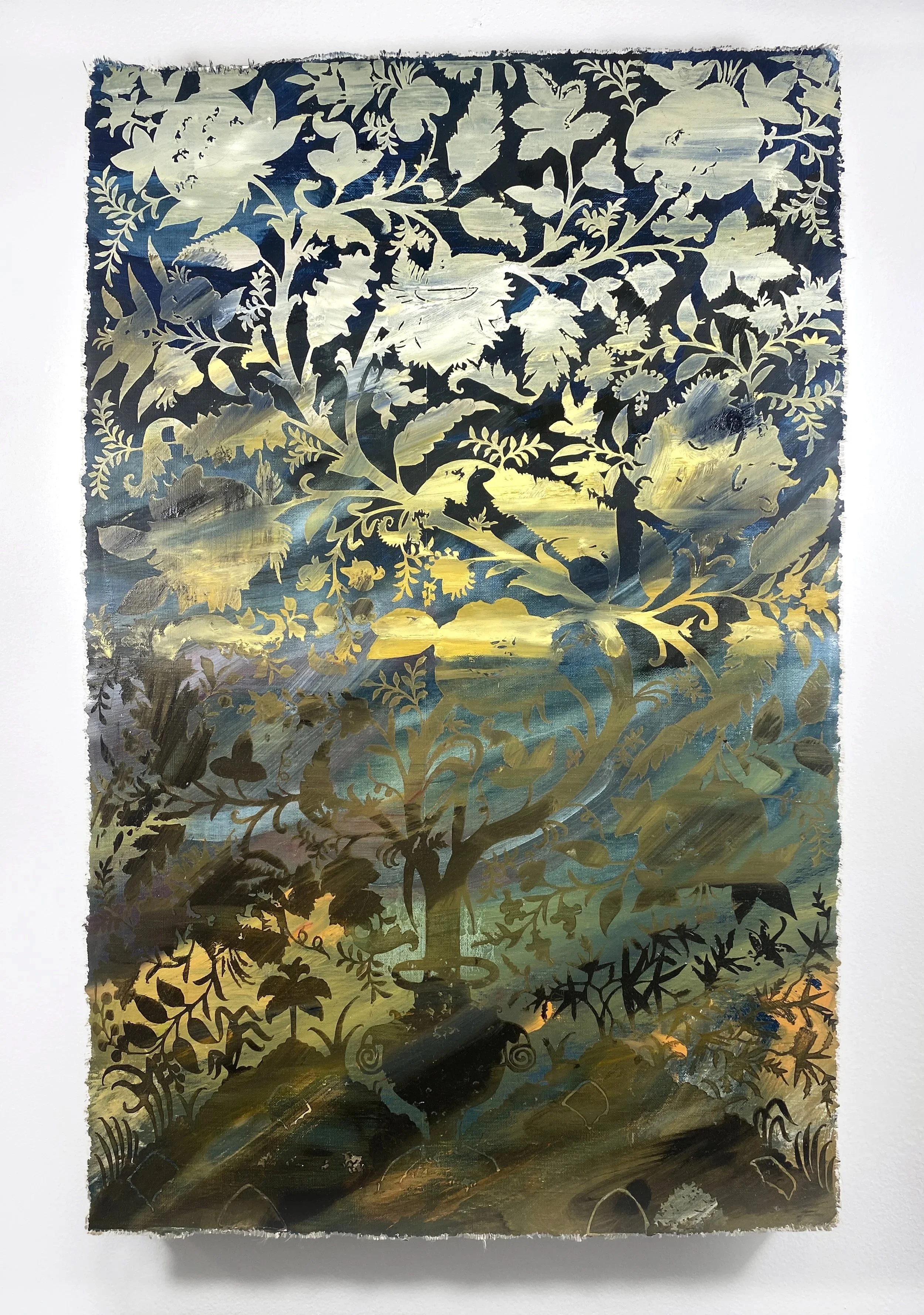
human Nature 18, oil on linen mounted on wood panel, 24" x 15", 2024
Description goes here -
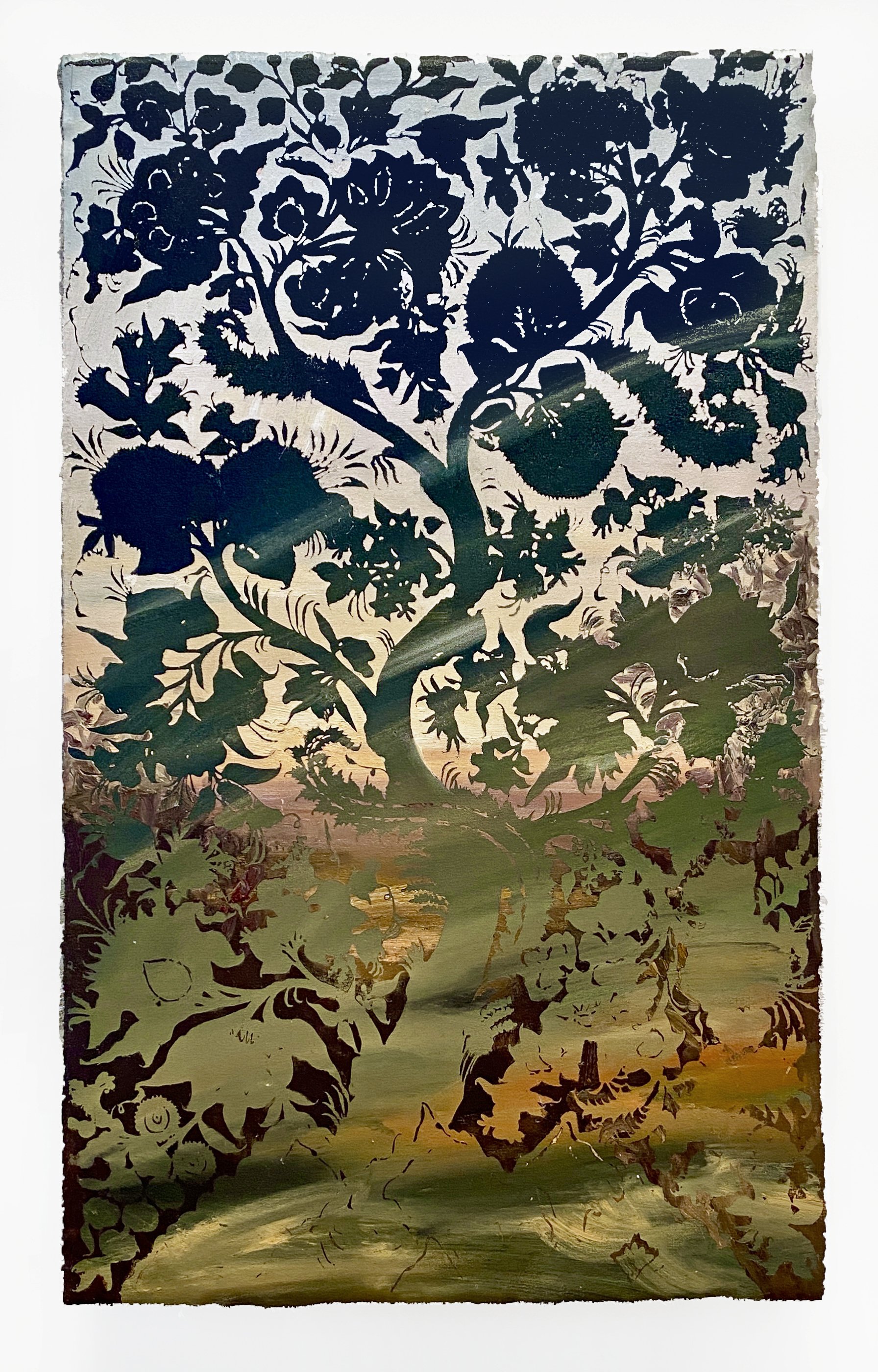
human Nature 31
Oil on canvas mounted on wood panel, 36” x 22”, 2026
-
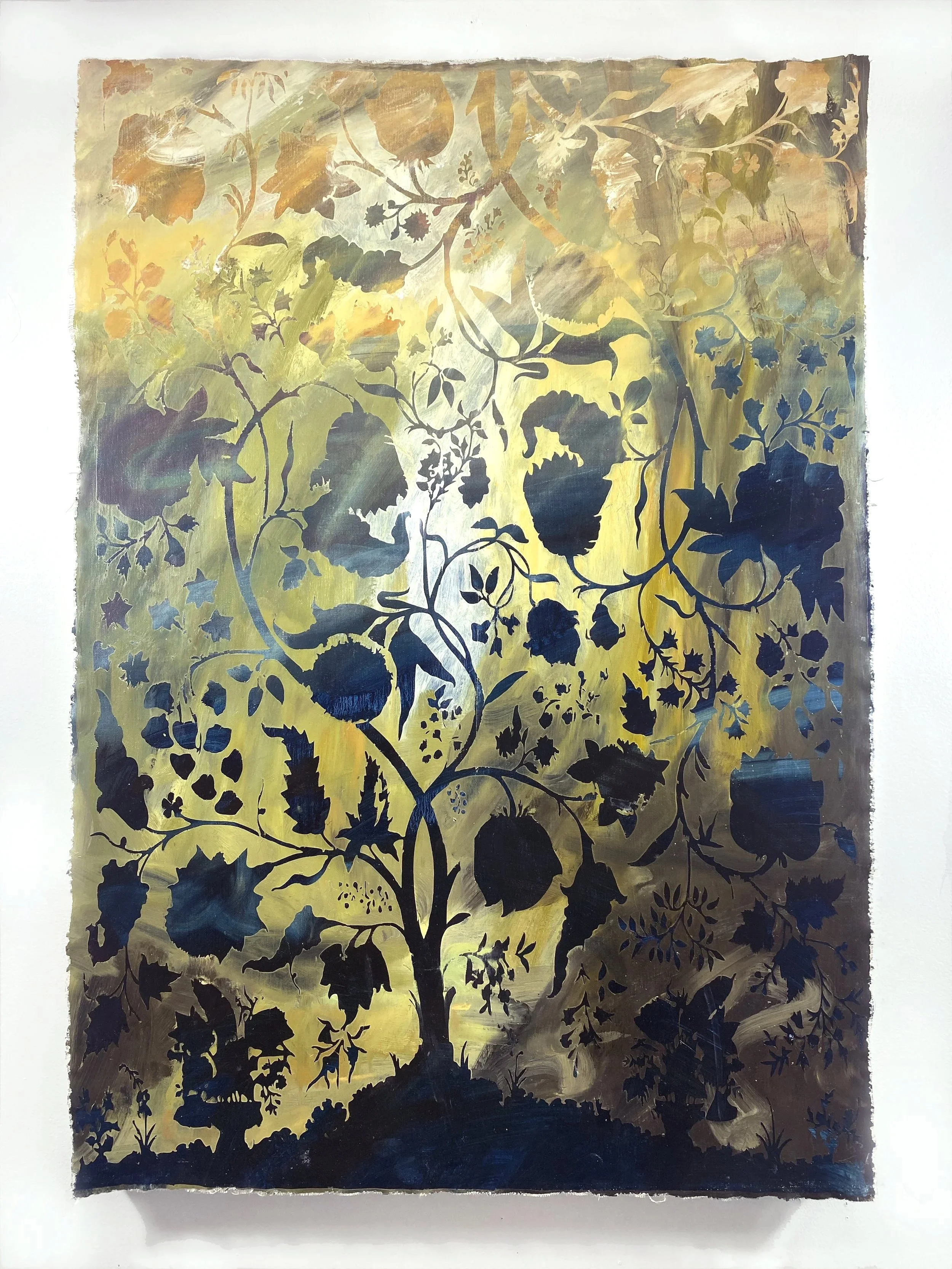
human Nature 19, oil on linen mounted on wood panel, 33" x 23", 2024
Description goes here -
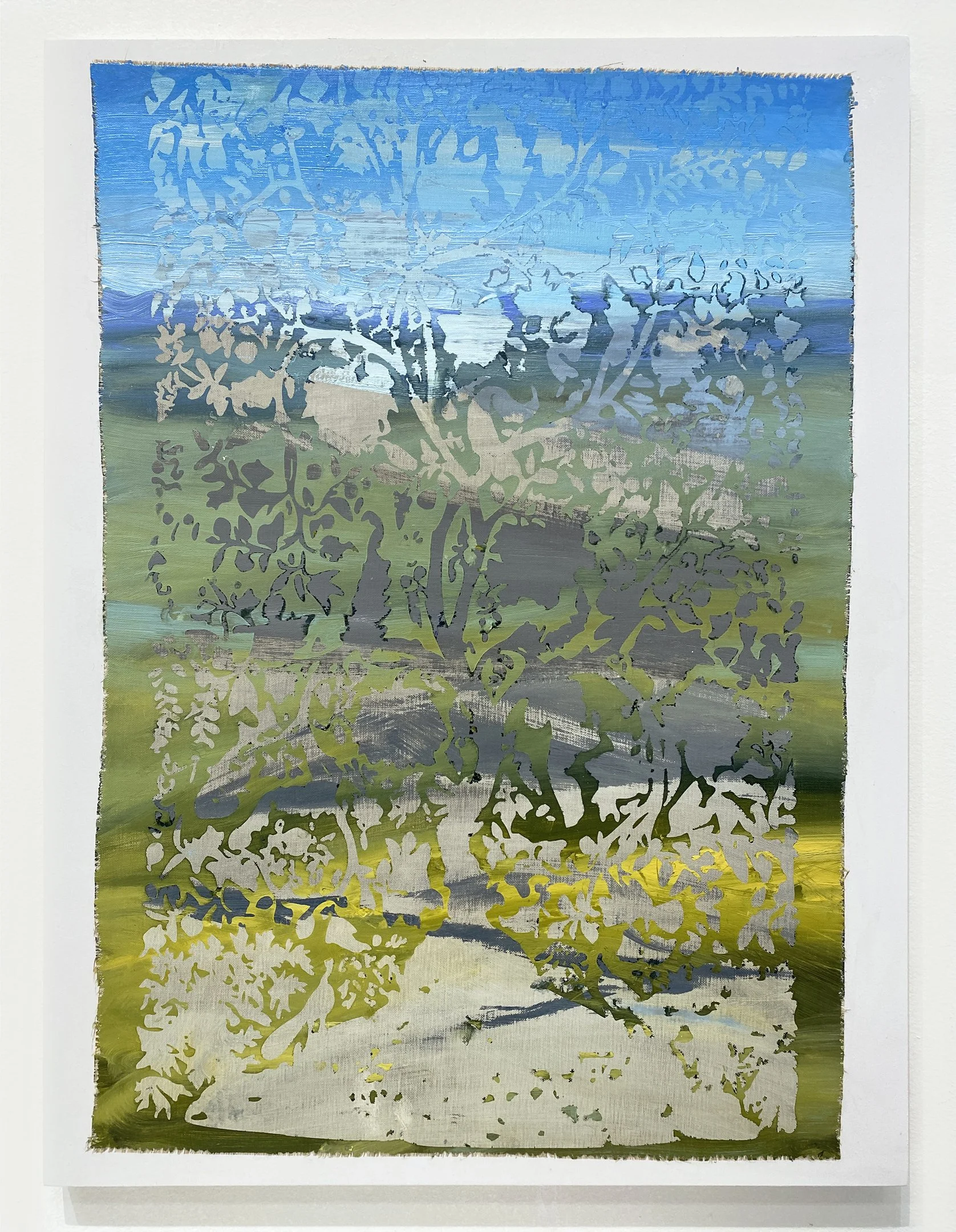
human Nature 9, oil on linen mounted on wood panel, 24" x 18", 2024
Description goes here -
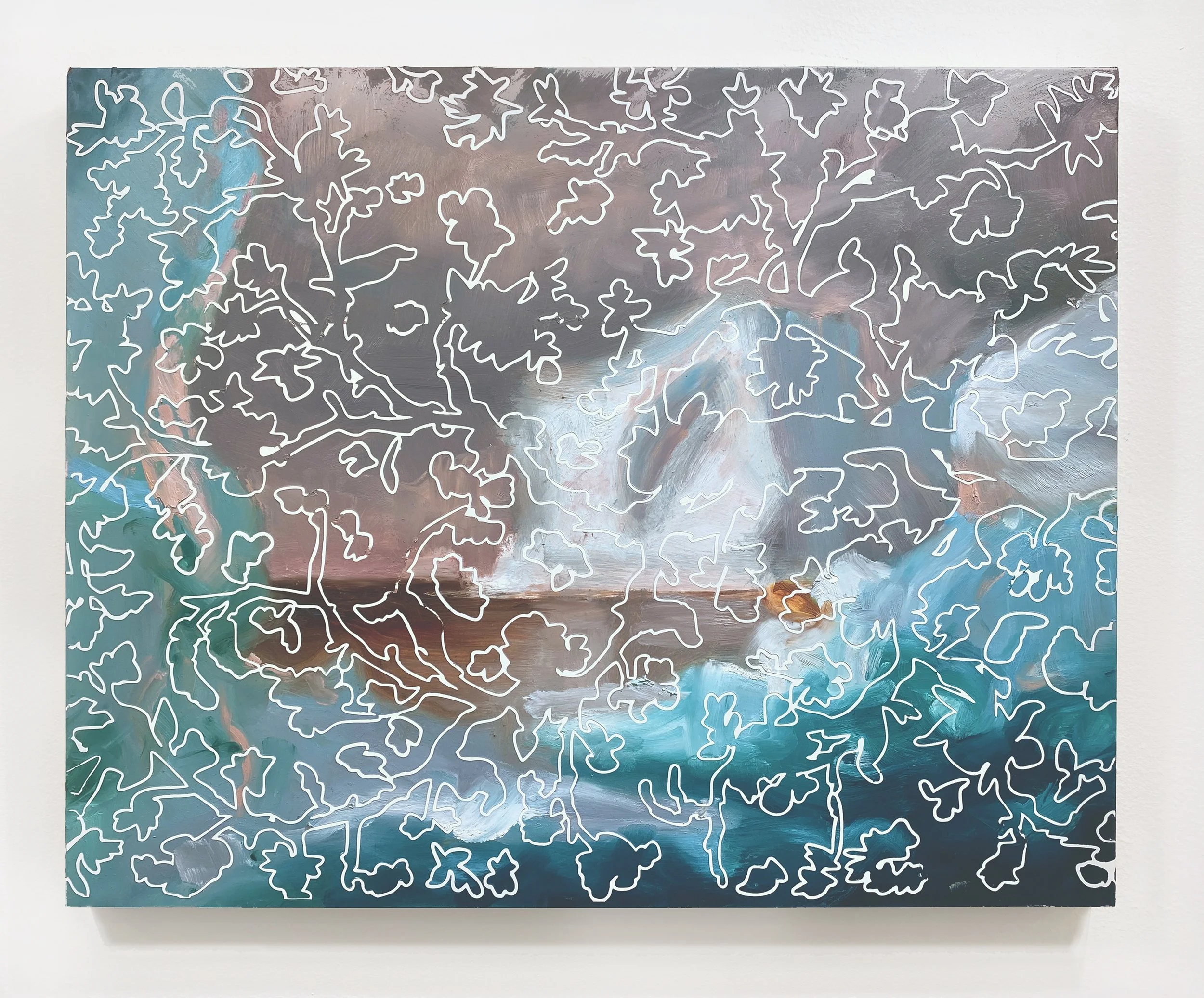
The Iceberg Cometh 4 (after Frederic Church), oil on gesso panel, 16” x 20”, 2024
-
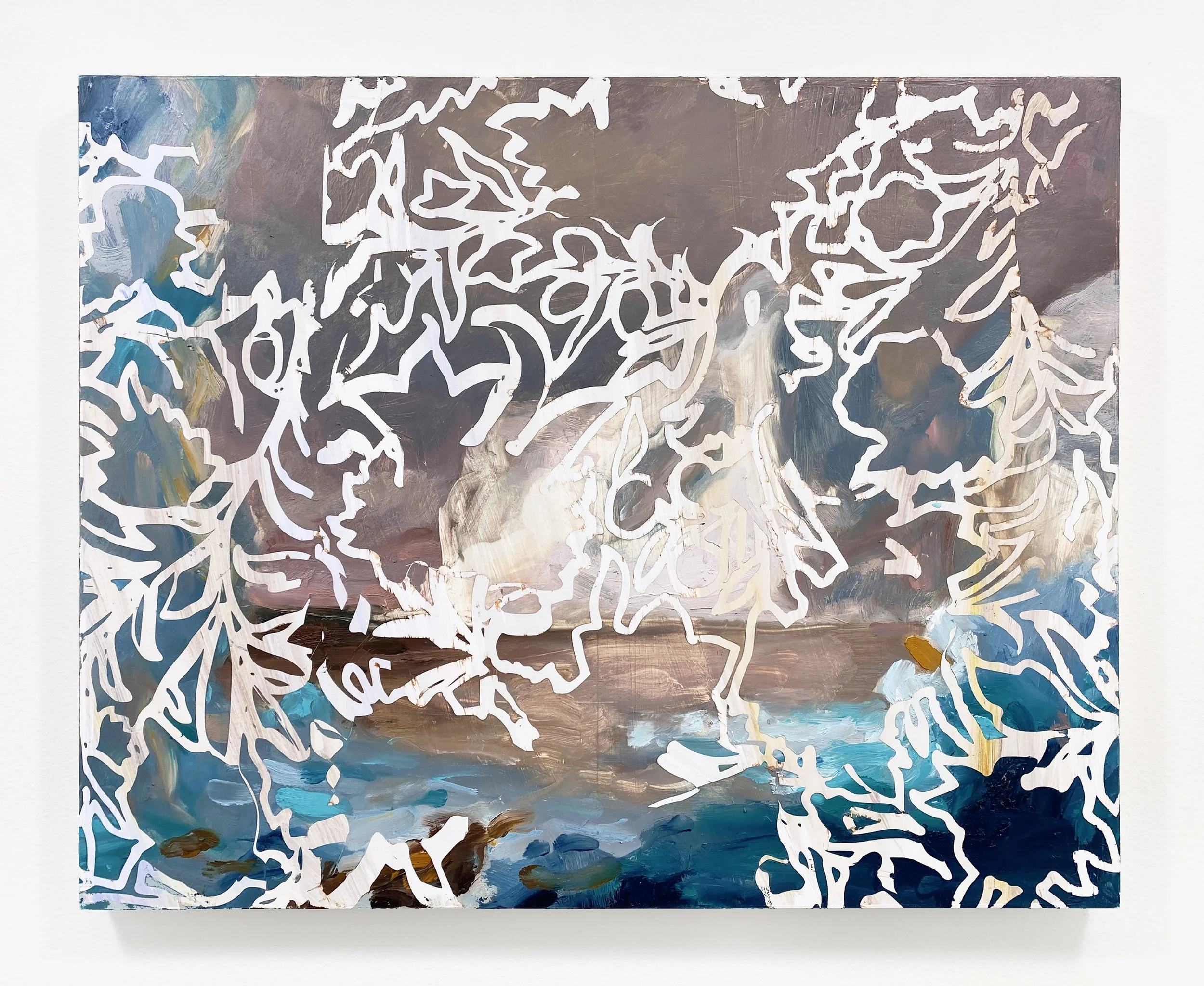
The Iceberg Cometh 3 (after Frederic Church), oil on gesso panel, 16” x 20”, 2024
-
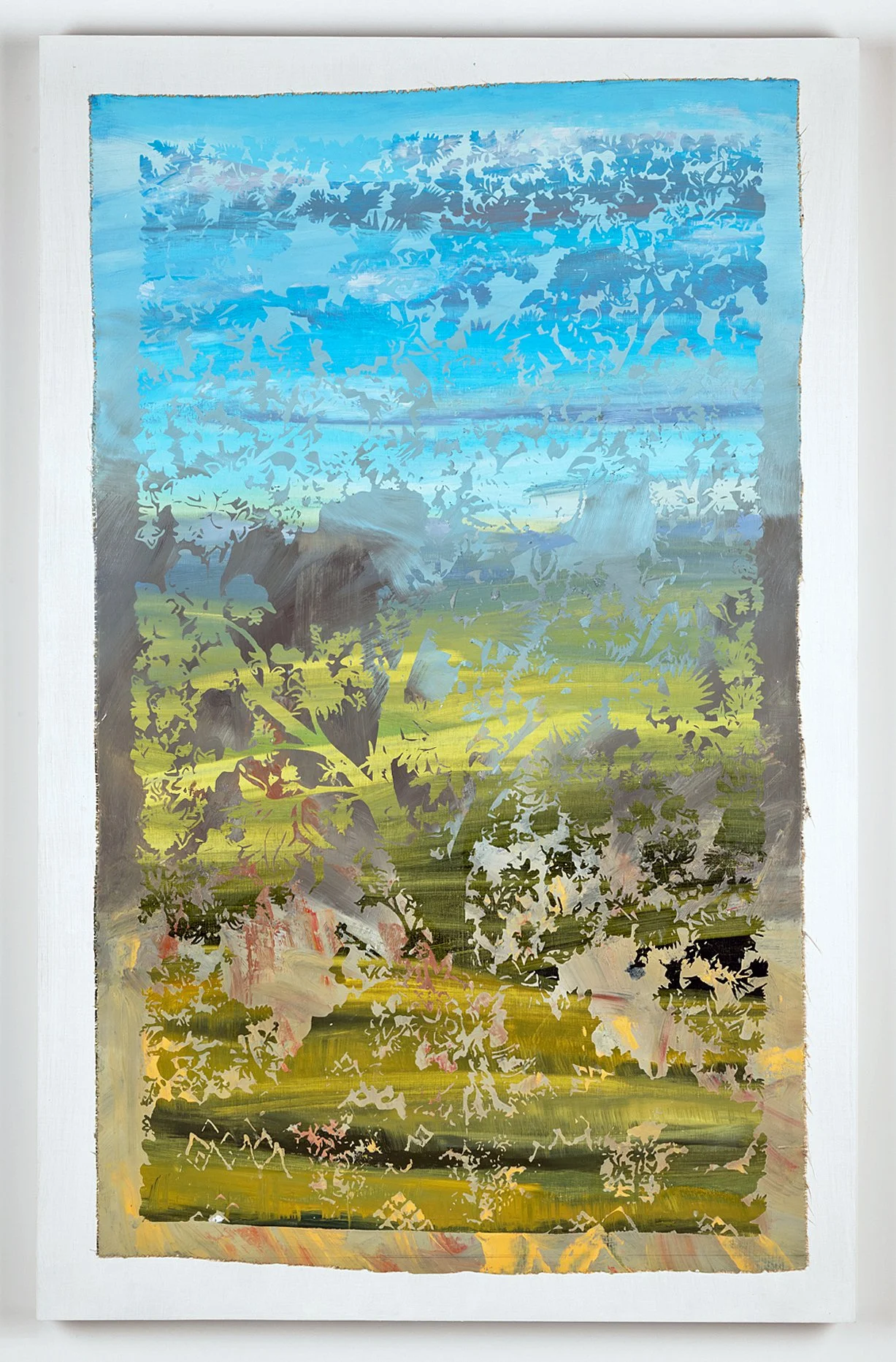
human Nature 8, oil on linen mounted on wood panel, 44" x 28", 2024
Description goes here -
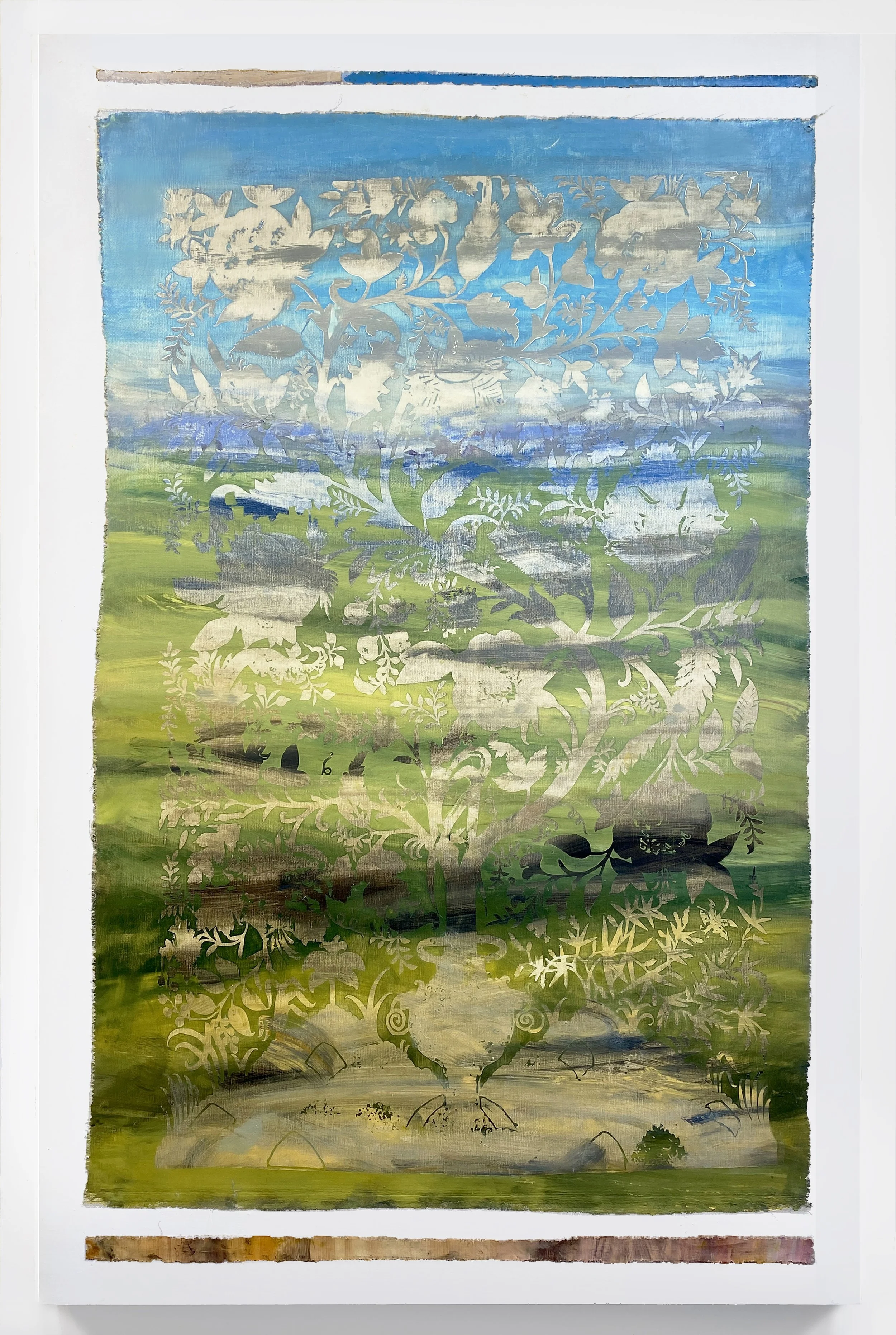
human Nature 12, oil on linen mounted on wood panel, 44" x 28", 2024
Description goes here -
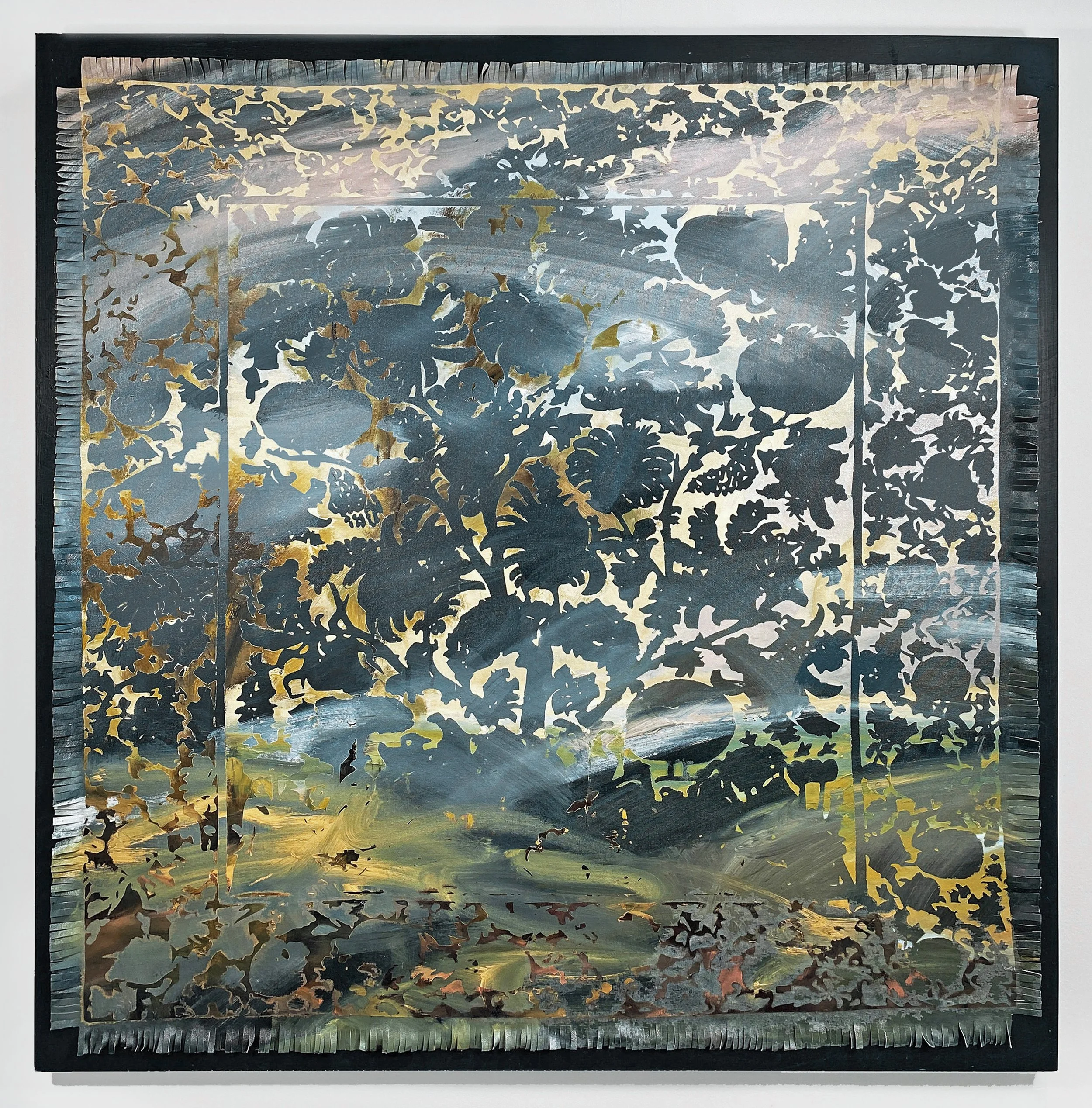
human Nature 22
Oil on canvas mounted on wood panel, 36" x 36", 2024
-
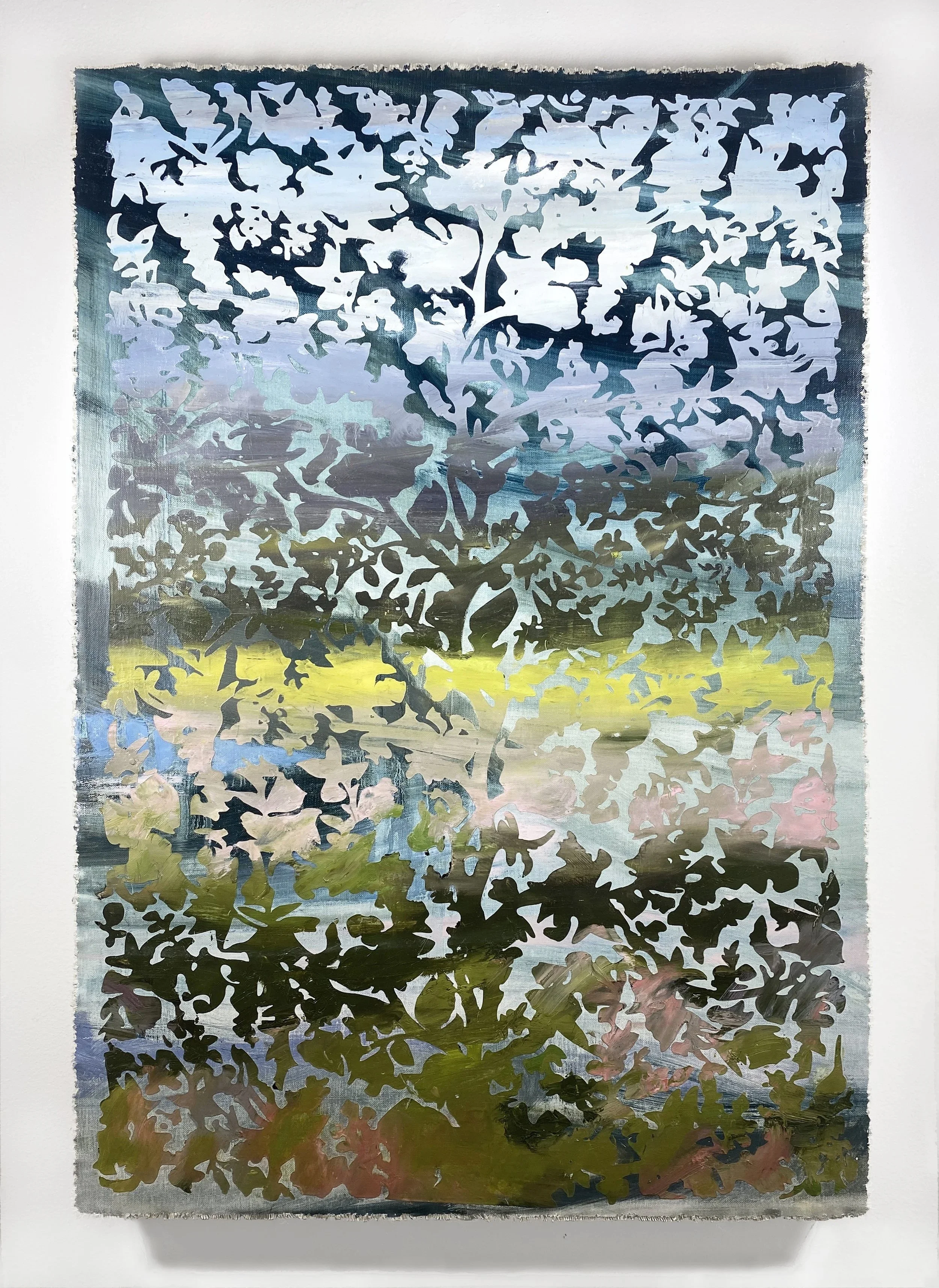
human Nature 16, oil on linen mounted on wood panel, 26" x 18", 2024
Description goes here -
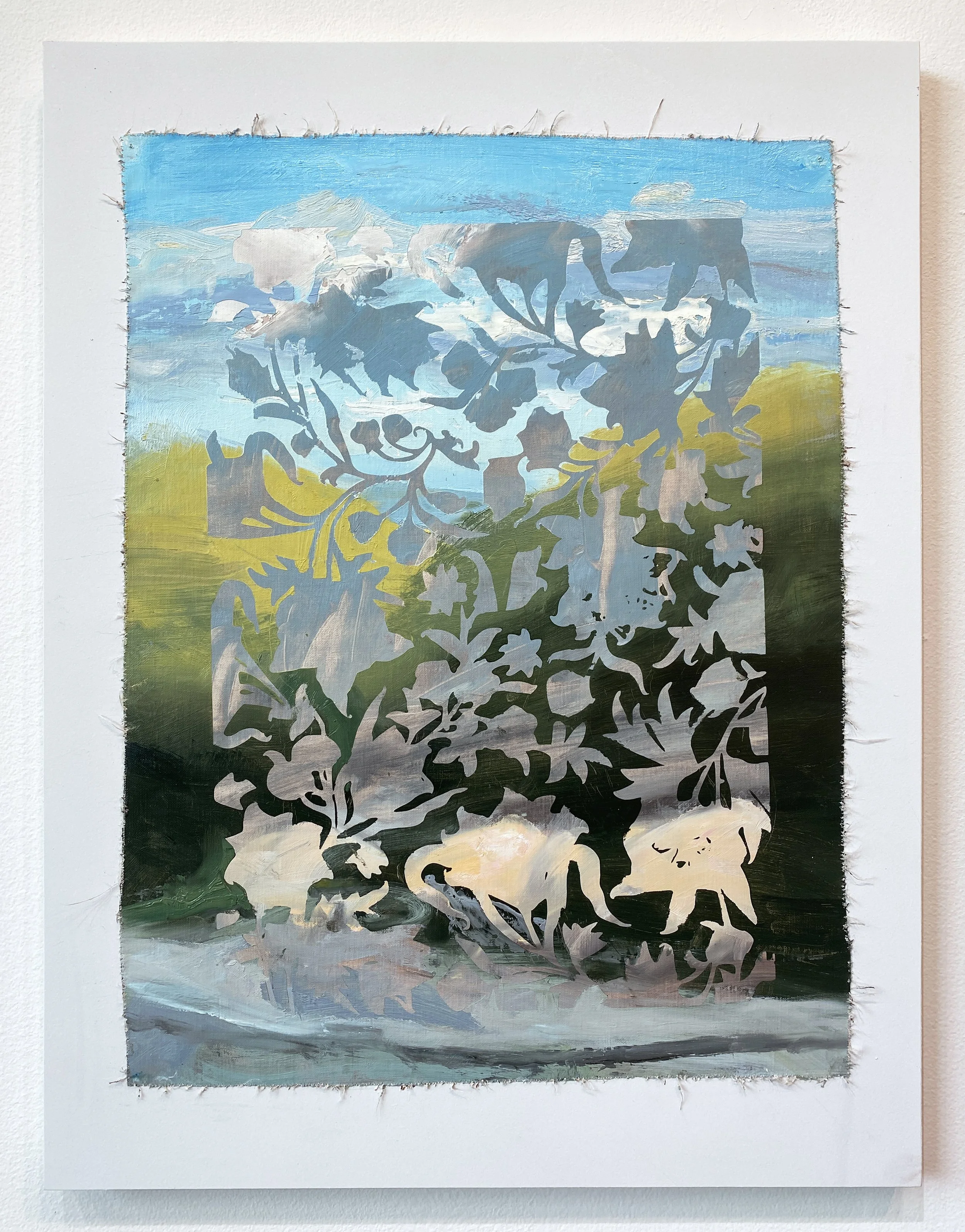
human Nature 11, oil on linen mounted on wood panel, 24" x 18" 2024
Description goes here
In human Nature, I use a layered painting technique to interweave historic textile patterns with expressive and romantic landscape traditions. In this way I examine how humans have commodified and attempted to control the natural world throughout Western history. Of particular interest is how the consequences of our actions are often masked with a veil of beauty. The pieces explore the historical significance and implications of 18th-century Indian chintz textiles. European passion for the beautiful, stylized natural designs of nature in these cotton textiles contributed to the establishment of the colonial cotton trade in the American South. These visually pleasing chintz patterns distracted from the dire consequences that continue to shape our landscape and society today.
Each piece in the series combines two distinct landscape interpretations which are interwoven using 18th Century textile patterns: a gesturally expressive layer representing pre-colonial America and a more structured layer drawing from 19th-century romantic landscape traditions, particularly the Hudson River School


