A project of atonement for environmental damage in the Moshannon Creek Watershed in Clearfield and Centre Counties, Pennsylvania.
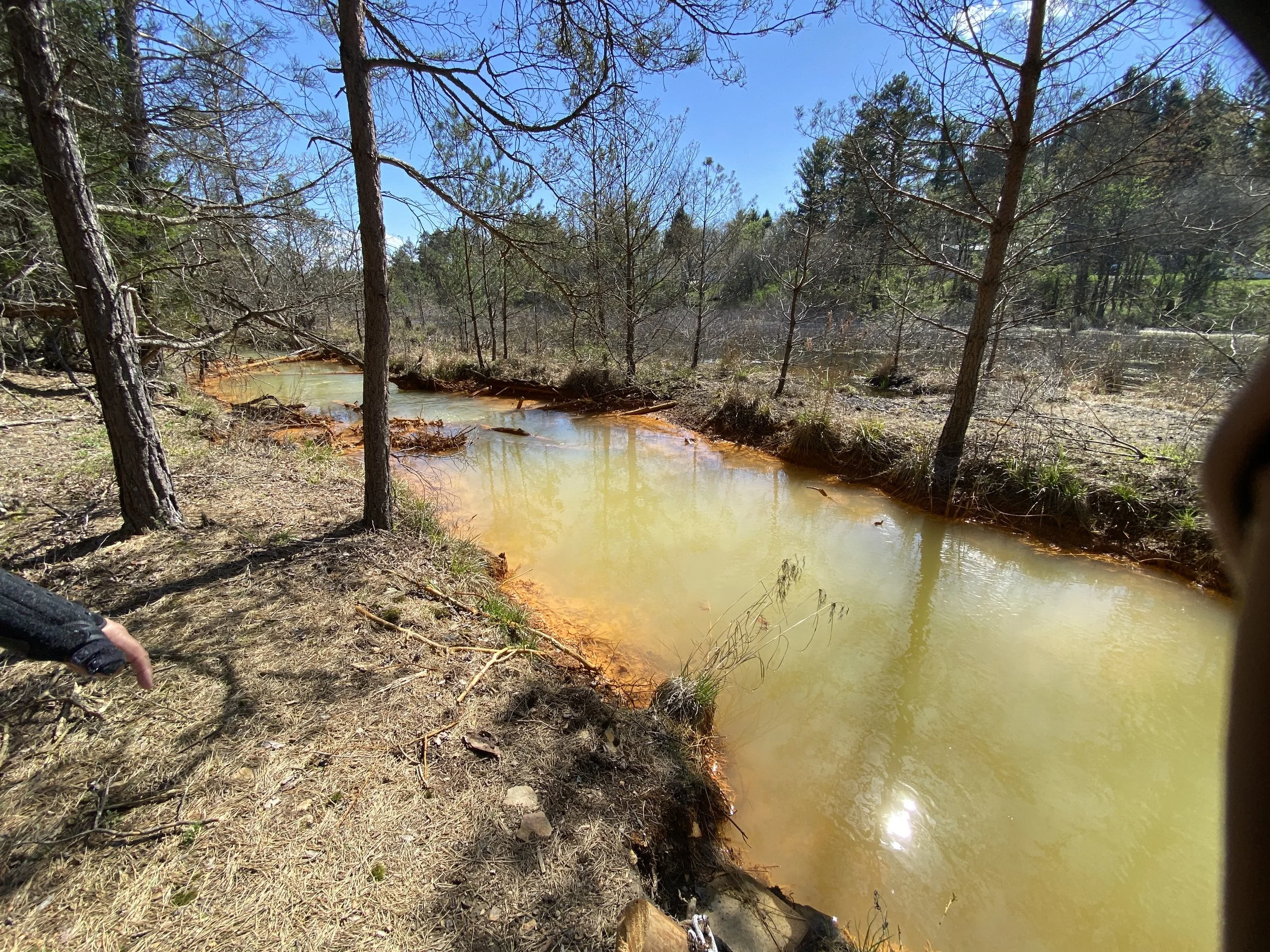
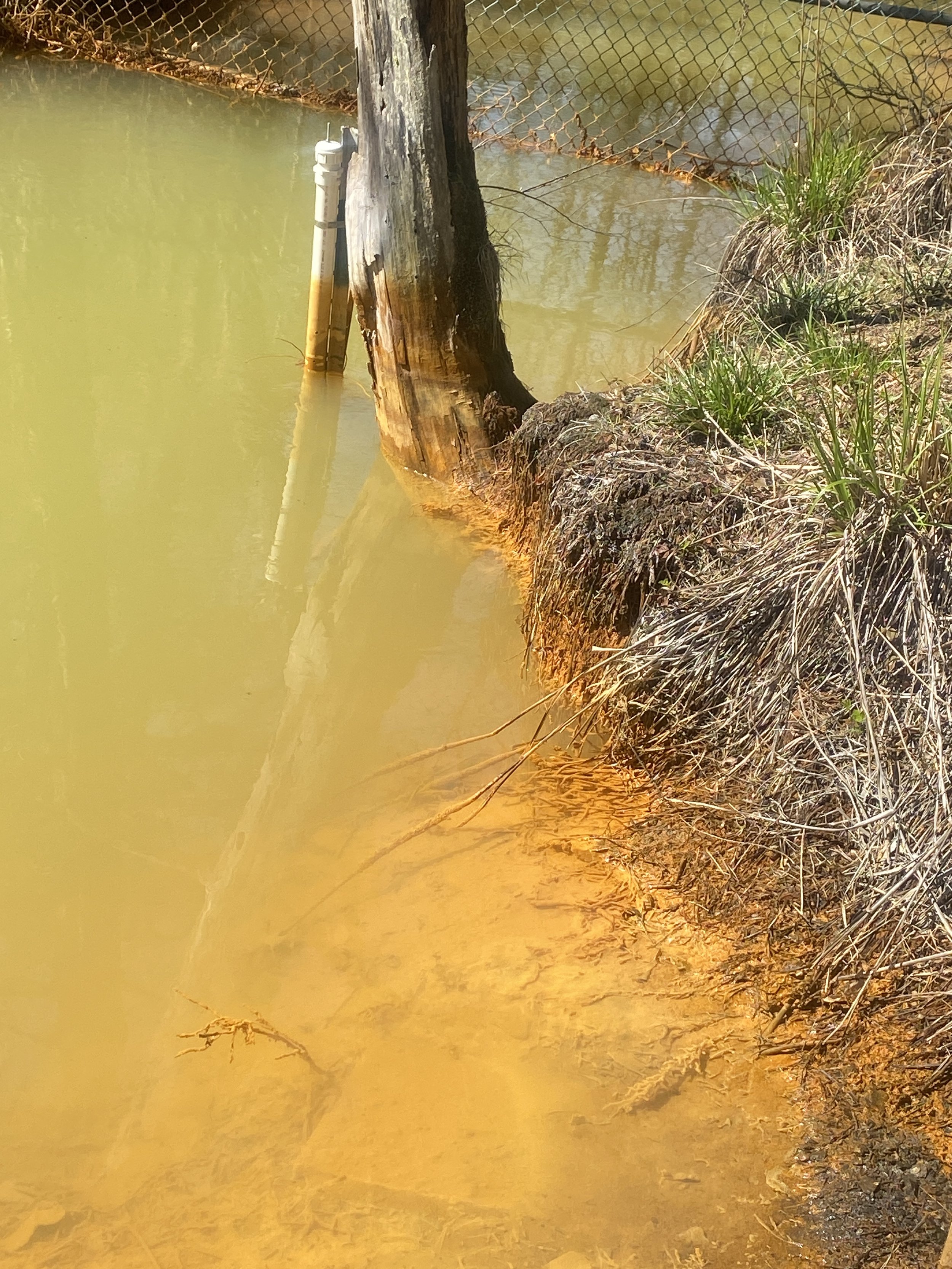
Yellow boy is the mining term for the yellow-to-orange sludge coating waterways contaminated by acid mine drainage (AMD). In Clearfield and Centre Counties, Pennsylvania where my ancestors were among the landowners who leased to coal mining companies, flooded abandoned mines spew thousands of gallons of contaminated water into the community every minute, turning stream and the Moshannon Creek into a yellow orange mess. The AMD carries heavy metals with a pH far below what aquatic life can survive; even water that looks pristine can test in the 2's.
For the Yellow Boy project, I created eleven drawings inspired by this landscape, made with natural ochre pigments reclaimed from Pennsylvania AMD sludge. Yellow boy is largely iron oxide, the very material ochre pigments are made from. I will donate 100% of proceeds from their sale to the Moshannon Creek Watershed Association (MCWA), the local organization leading mitigation efforts. After visiting the watershed twice with MCWA guides Eric Skrivseth and George Franchock, I hope eventually to make my own ochre from AMD discharge on my ancestors' land. Below are the first handful of drawings made from coal and AMD ochre pigments sourced from Central Appalachian AMD recovery projects in Eastern PA. Stay tuned for updates on the progress of this project!
Learn about the Moshannon Creek Watershed Association
100% of proceeds from the sale of my Yellow Boy drawings will be donated to the Moshannon Creek Watershed Association. Drawings will be exhibited at my show Hubris and the Sublime at GoggleWorks Center for the Arts in Reading, PA, opening August 15. Please join us for an opening reception August 21, 2026!
About the Drawings
Along with AMD-sourced ochre, I sketch faint lines with an actual piece of coal from the watershed. The oils in coal could eventually darken and bleed into the paper. This decision is a conceptual, time-based element of the work: using coal on paper made from cotton plants mirrors society's use of coal too. In our hunger for energy we set aside caution, just as I set aside caution in order to use this symbolic material. The coal, never meant to exist in proximity to plants, may alter the artwork like it is altering the natural world.
There is an element of the unknown attached to the drawings, mirroring the uncertain future of the Earth's climate crisis. In contrast, the money donated to the MCWA from each drawing's purchase has a lasting effect on the watershed's ecology. The MCWA and its partners have strong plans for treatment — what they need is support for day-to-day operations. Every drawing purchased sends its full proceeds directly to that work. Drawings are sold from this page and my available works page. They will be released for pickup/shipping at the conclusion of the GoggleWorks show (October 13-14, 2026).
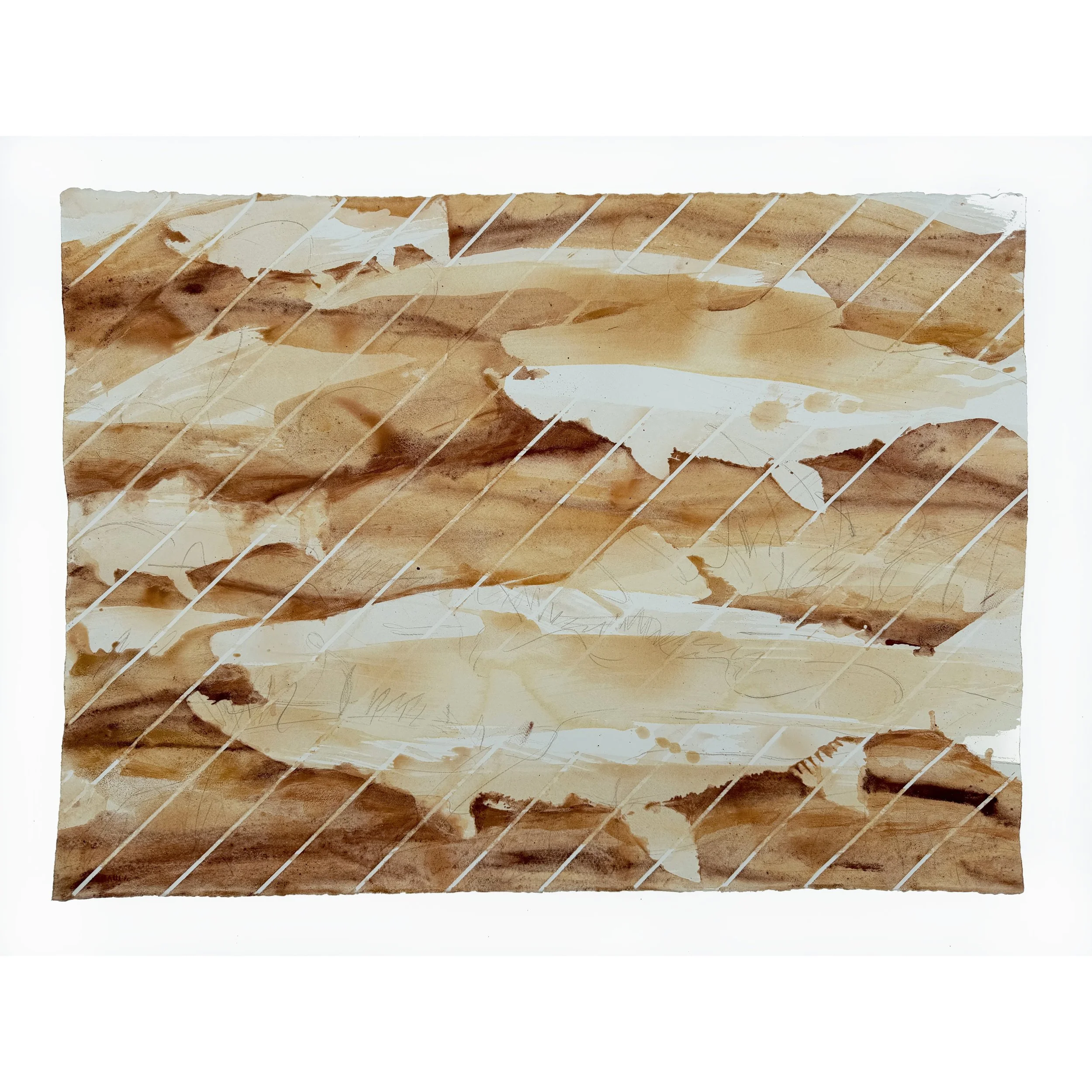
Central Appalachian AMD iron oxide pigment, coal on Arches 140 lb cold pressed watercolor paper, float mounted, 22” x 30”, 2026
This work includes a time-based ephemeral aspect of using coal on paper. Read more here.
100% of proceeds will be donated to the Moshannon Creek Watershed Association
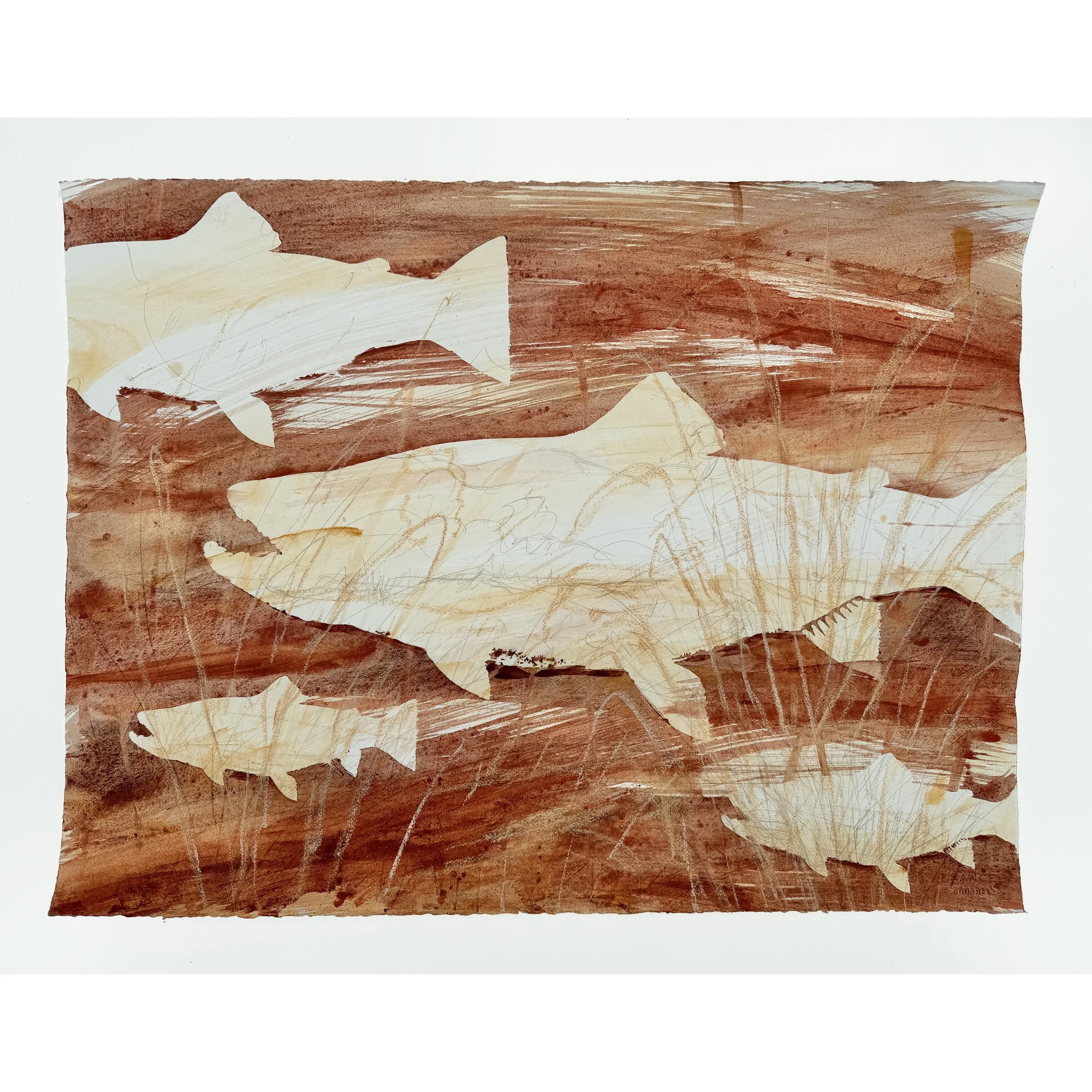
Central Appalachian AMD iron oxide pigment, coal on Arches 140 lb cold pressed watercolor paper, float mounted, 22” x 30”, 2026
This work includes a time-based ephemeral aspect of using coal on paper. Read more here.
100% of proceeds will be donated to the Moshannon Creek Watershed Association
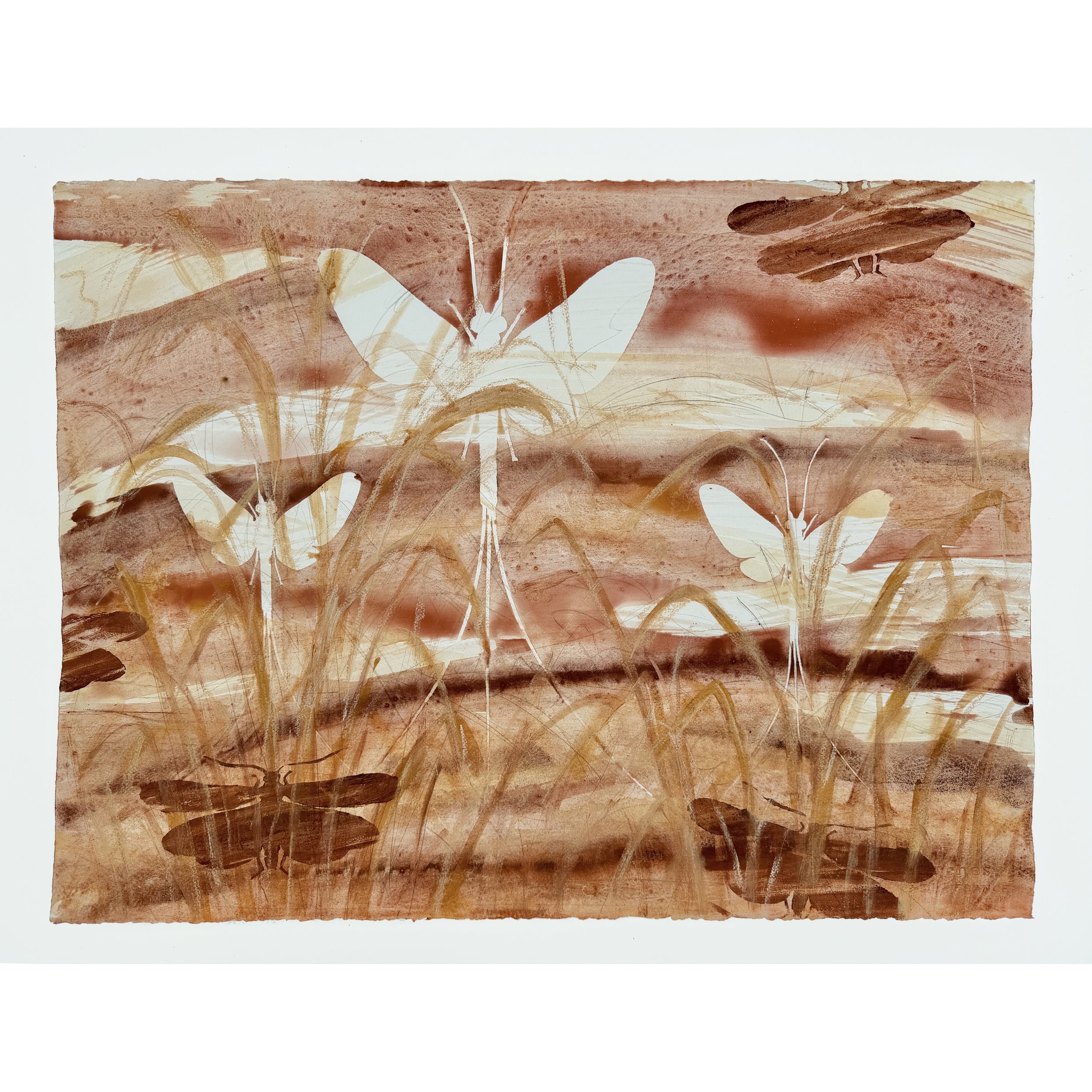
Central Appalachian AMD iron oxide pigment, coal on Arches 140 lb cold pressed watercolor paper, float mounted, 22” x 30”, 2026
This work includes a time-based ephemeral aspect of using coal on paper. Read more here.
100% of proceeds will be donated to the Moshannon Creek Watershed Association
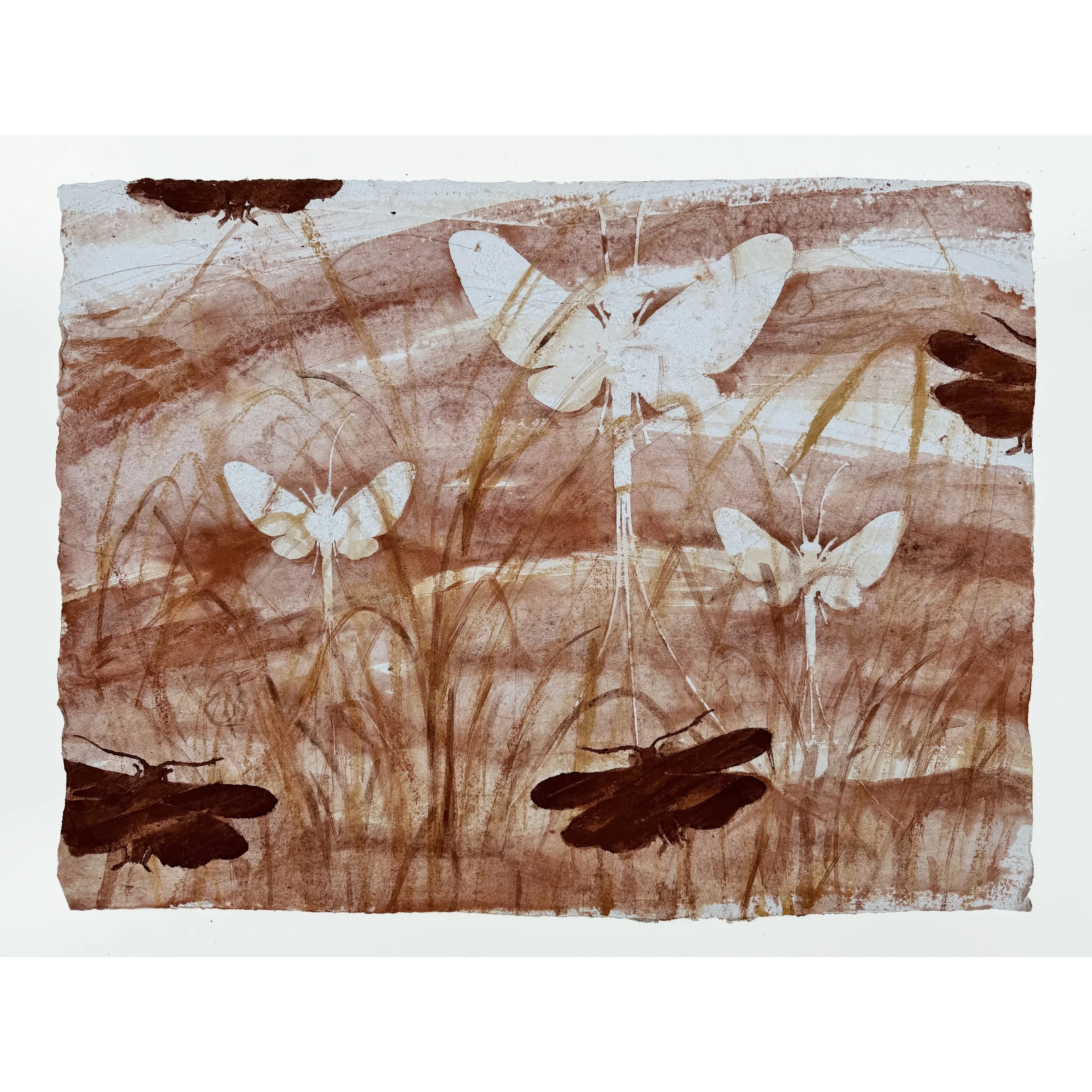
Central Appalachian AMD iron oxide pigment, coal on 300 lb handmade watercolor paper, float mounted
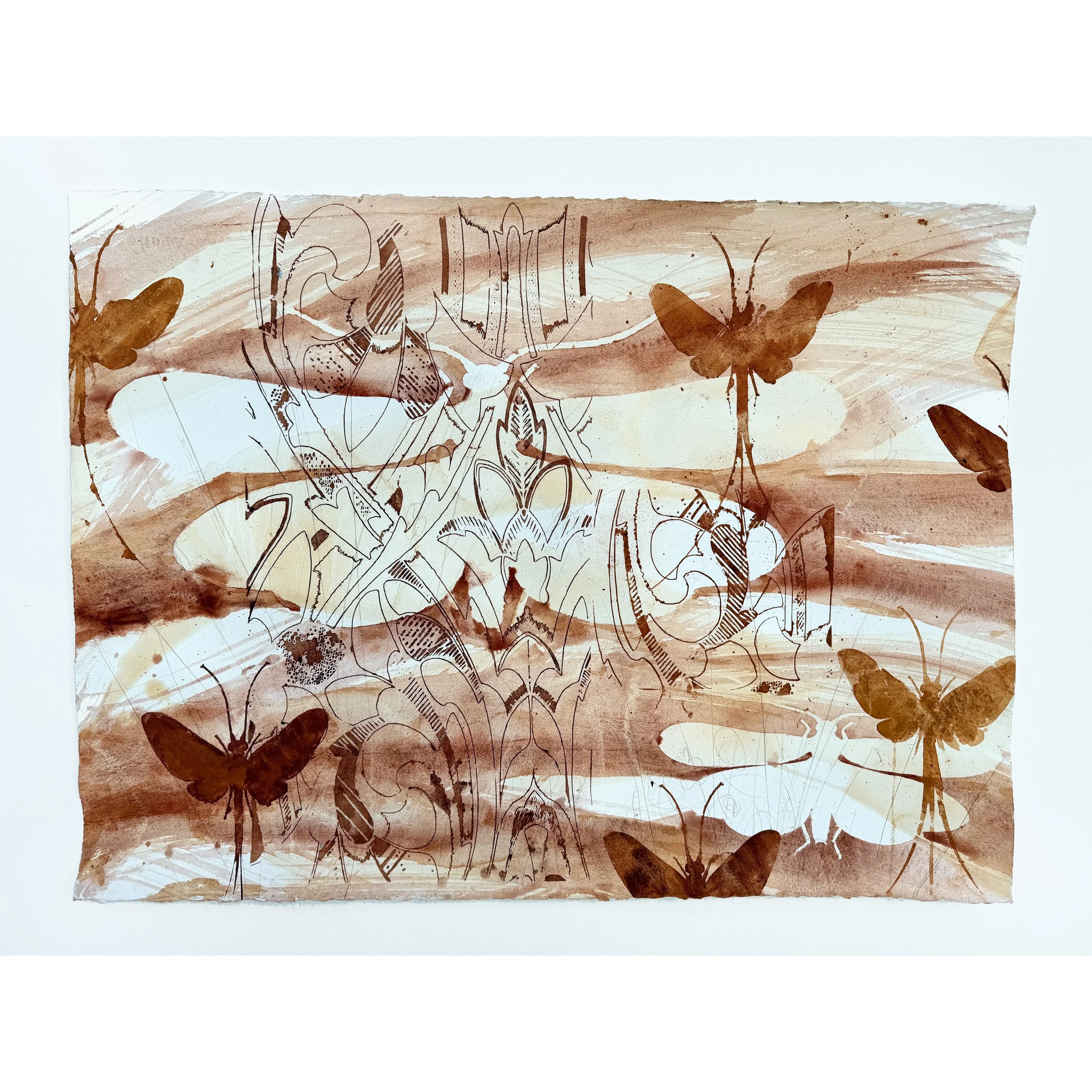
Central Appalachian AMD iron oxide pigment, coal on Arches 140 lb cold pressed watercolor paper, float mounted, 22” x 30”, 2026
This work includes a time-based ephemeral aspect of using coal on paper. Read more here.
100% of proceeds will be donated to the Moshannon Creek Watershed Association
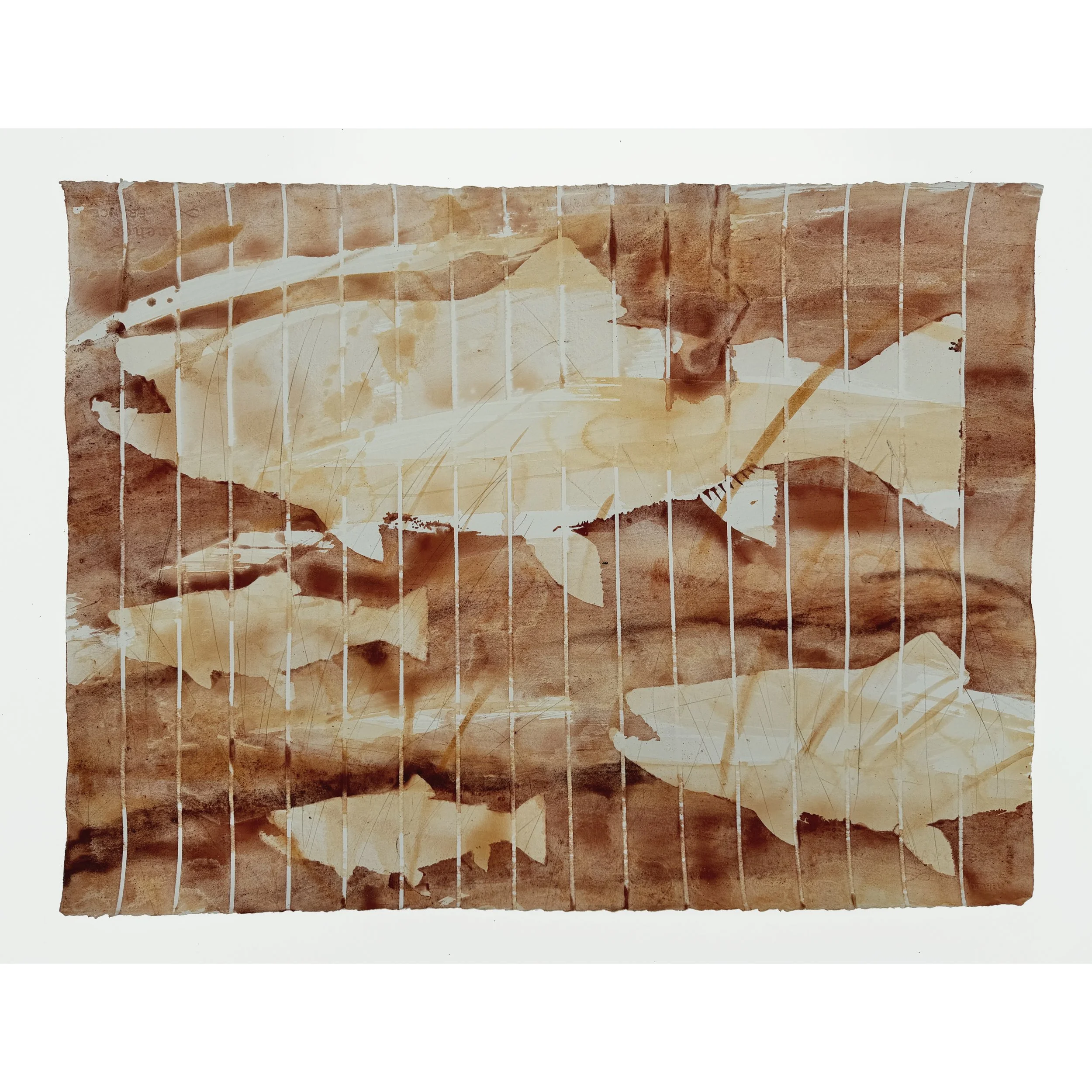
Central Appalachian AMD iron oxide pigment, coal on Arches 140 lb cold pressed watercolor paper, float mounted, 22” x 30”, 2026
This work includes a time-based ephemeral aspect of using coal on paper. Read more here.
100% of proceeds will be donated to the Moshannon Creek Watershed Association
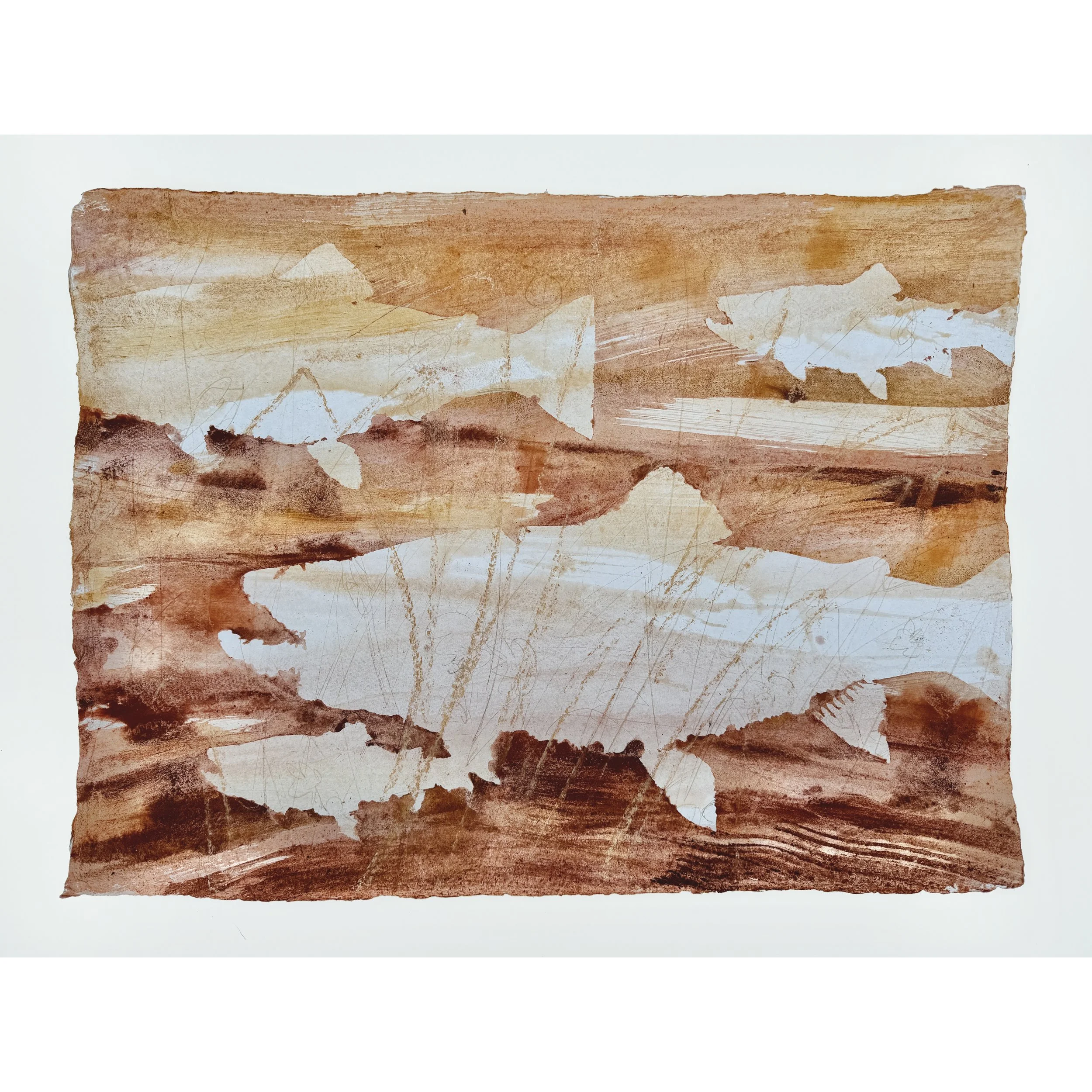
Central Appalachian AMD iron oxide pigment, coal on 300 lb handmade watercolor paper, float mounted, 22” x 30”, 2026
This work includes a time-based ephemeral aspect of using coal on paper. Read more here.
100% of proceeds will be donated to the Moshannon Creek Watershed Association
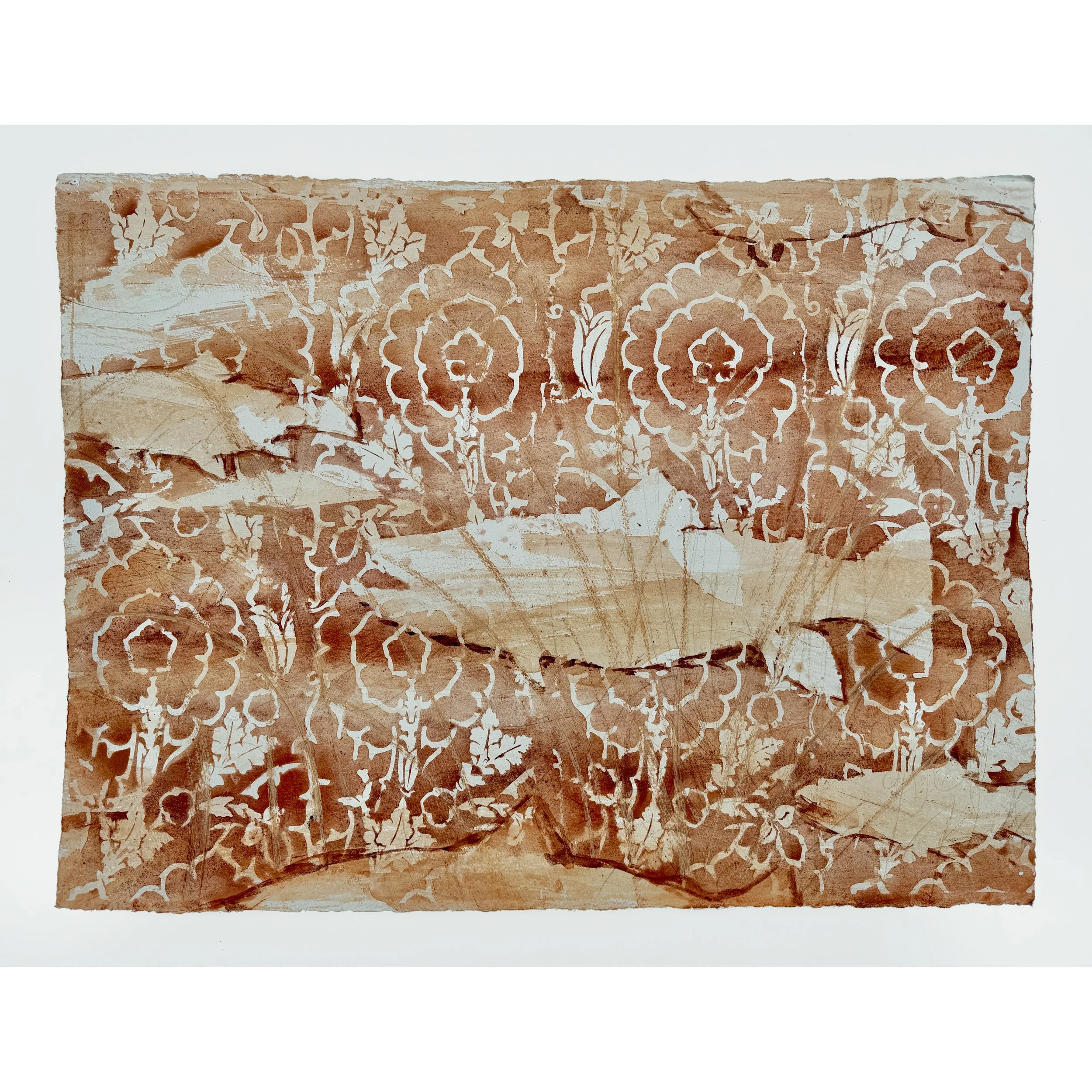
Central Appalachian AMD iron oxide pigment, coal on Arches 300 lb cold pressed watercolor paper, float mounted, 22” x 30”, 2026
This work includes a time-based ephemeral aspect of using coal on paper. Read more here.
100% of proceeds will be donated to the Moshannon Creek Watershed Association
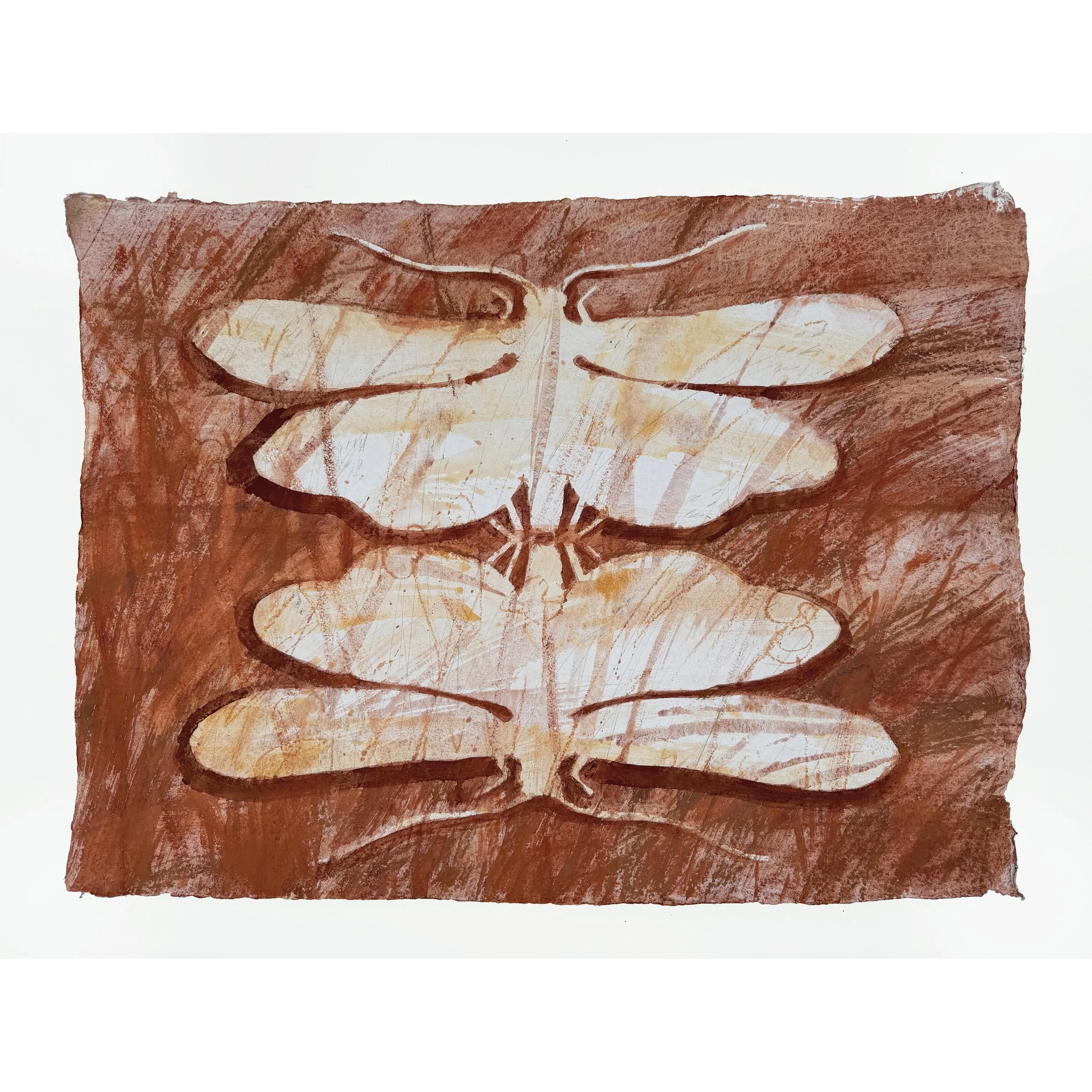
Central Appalachian AMD iron oxide pigment, coal on 300 lb handmade watercolor paper, float mounted, 22” x 30”, 2026
This work includes a time-based ephemeral aspect of using coal on paper. Read more here.
100% of proceeds will be donated to the Moshannon Creek Watershed Association
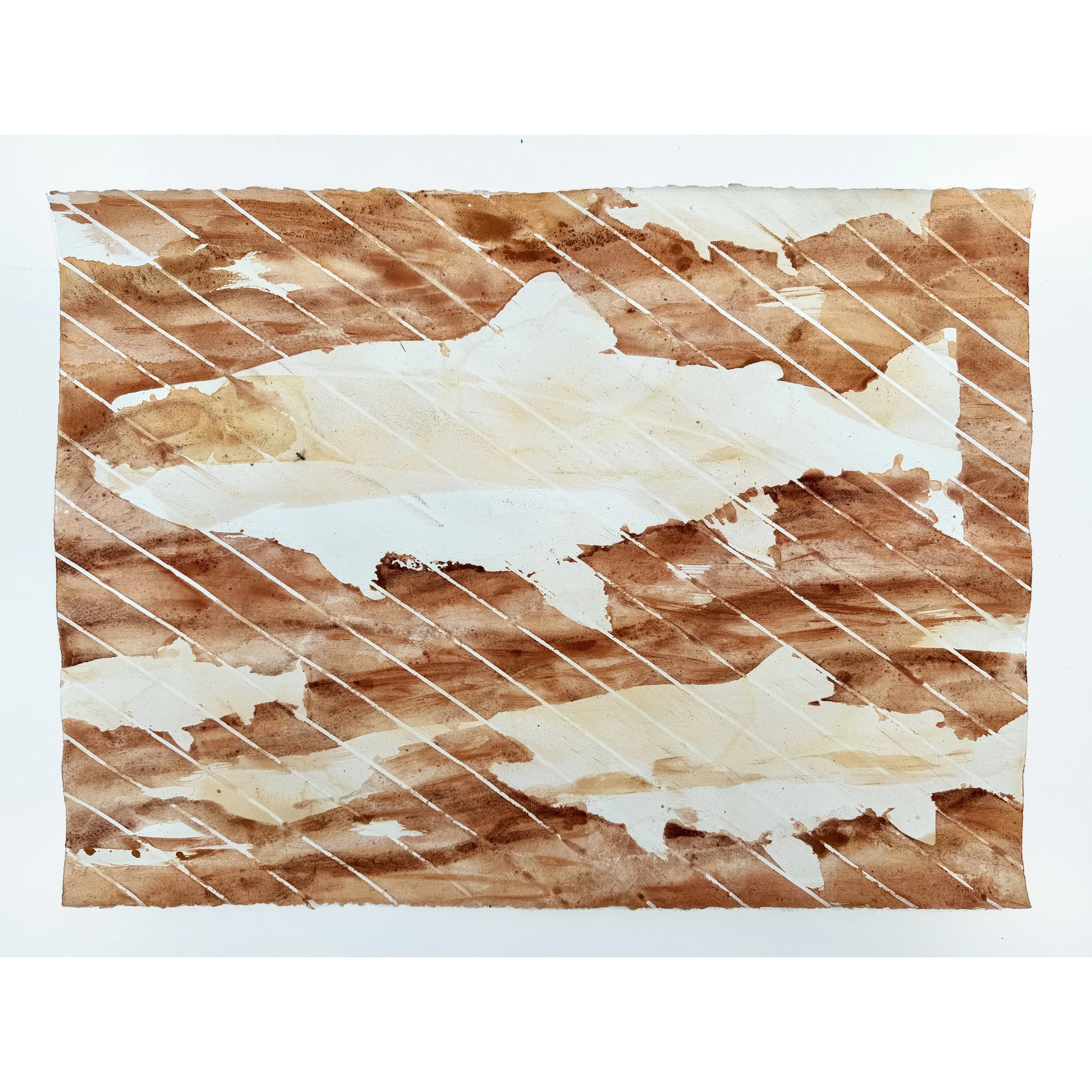
Central Appalachian AMD iron oxide pigment, coal on Arches 140 lb cold pressed watercolor paper, float mounted, 22” x 30”, 2026
No coal was used in this piece.
100% of proceeds will be donated to the Moshannon Creek Watershed Association
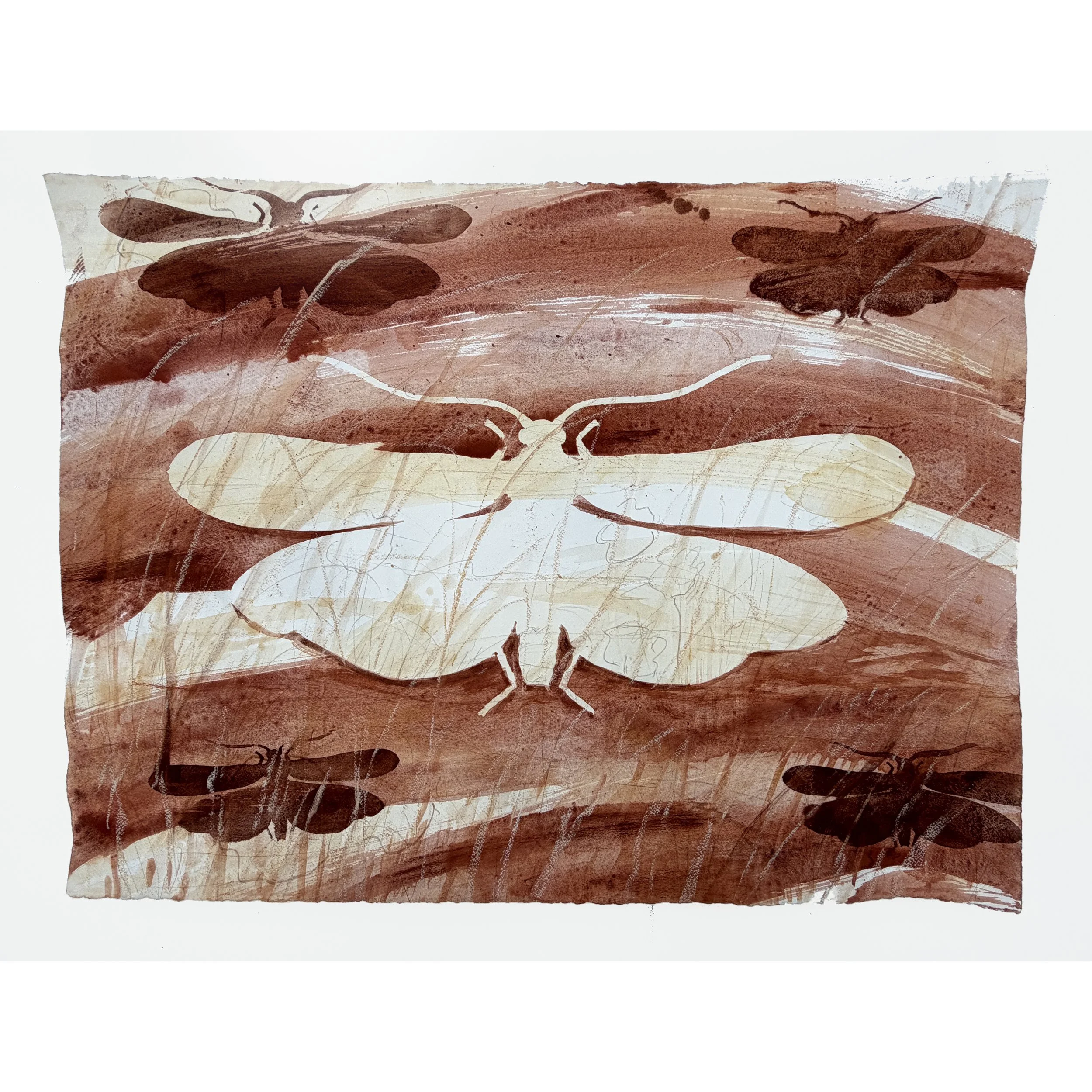
Central Appalachian AMD iron oxide pigment, coal on Arches 140 lb cold pressed watercolor paper, float mounted, 22” x 30”, 2026
This work includes a time-based ephemeral aspect of using coal on paper. Read more here.
100% of proceeds will be donated to the Moshannon Creek Watershed Association
What’s in the Name?
"Yellow boy" was British slang for English gold coins, dating to at least the mid-1600s — the earliest use I've found is a 1654 book by English physician Edmund Gayton, Pleasant Notes upon Don Quixot:
The view of an old Wallet, lin'd with yellow Boyes, Turn'd his Asse-Funeralls to gallant joyes.
The term likely traveled with Scots-Irish and northern English settlers who arrived in Appalachia beginning in the early 1700s, whose relative isolation preserved old vocabulary for generations. By the time coal mining became a way of life there, miners had nicknamed the bright yellowish-orange sludge emerging from flooded mines "yellow boy" too — echoing that old word for gold. It is an ironic name: a word once used for real gold, now describing a toxic substance.
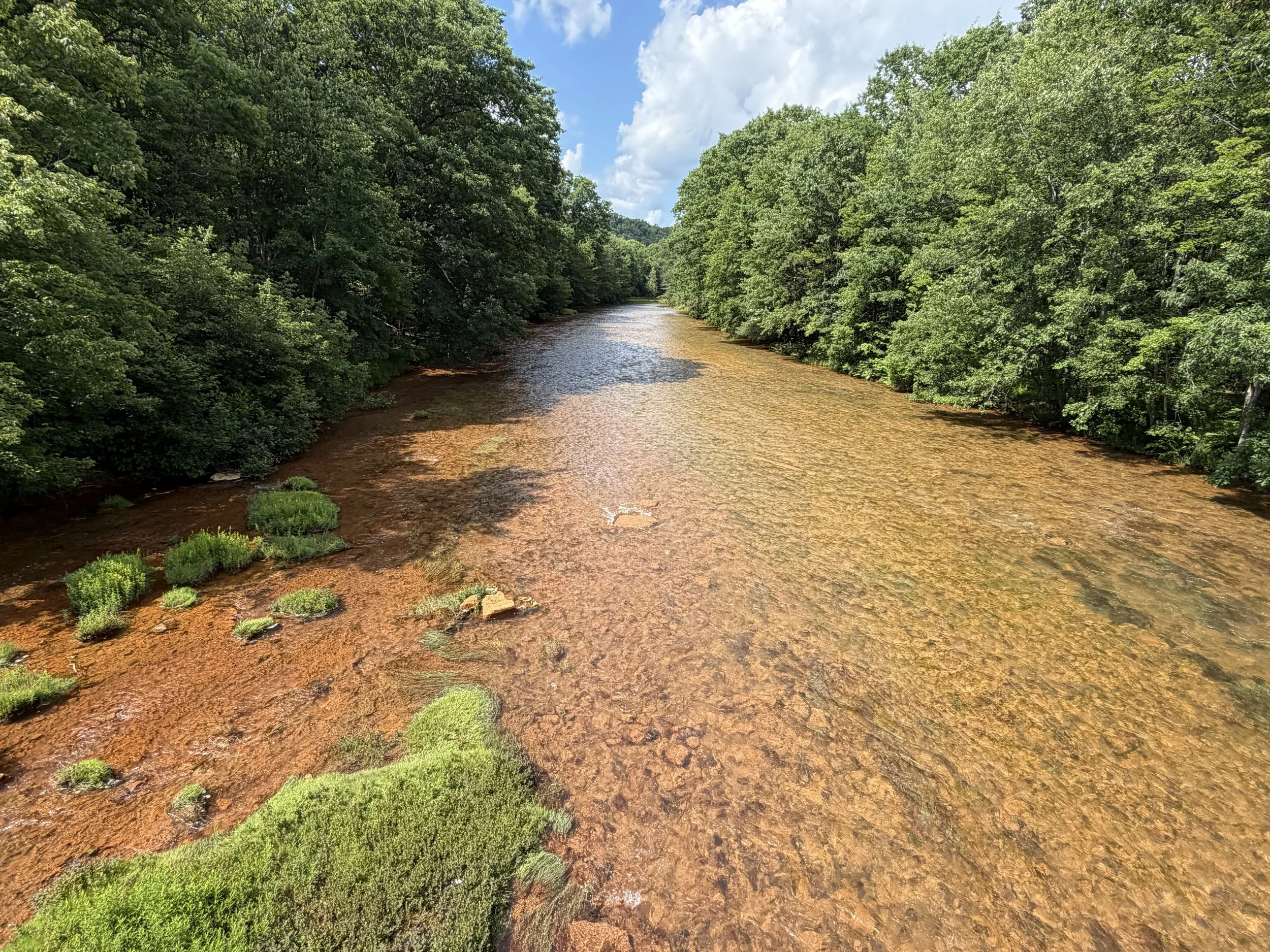
Moshannon Creek, locally known as the Red Moshannon or Red Mo. It becomes contaminated with AMD fairly close to the headwaters and flows into the West Branch of the Susquehanna River.
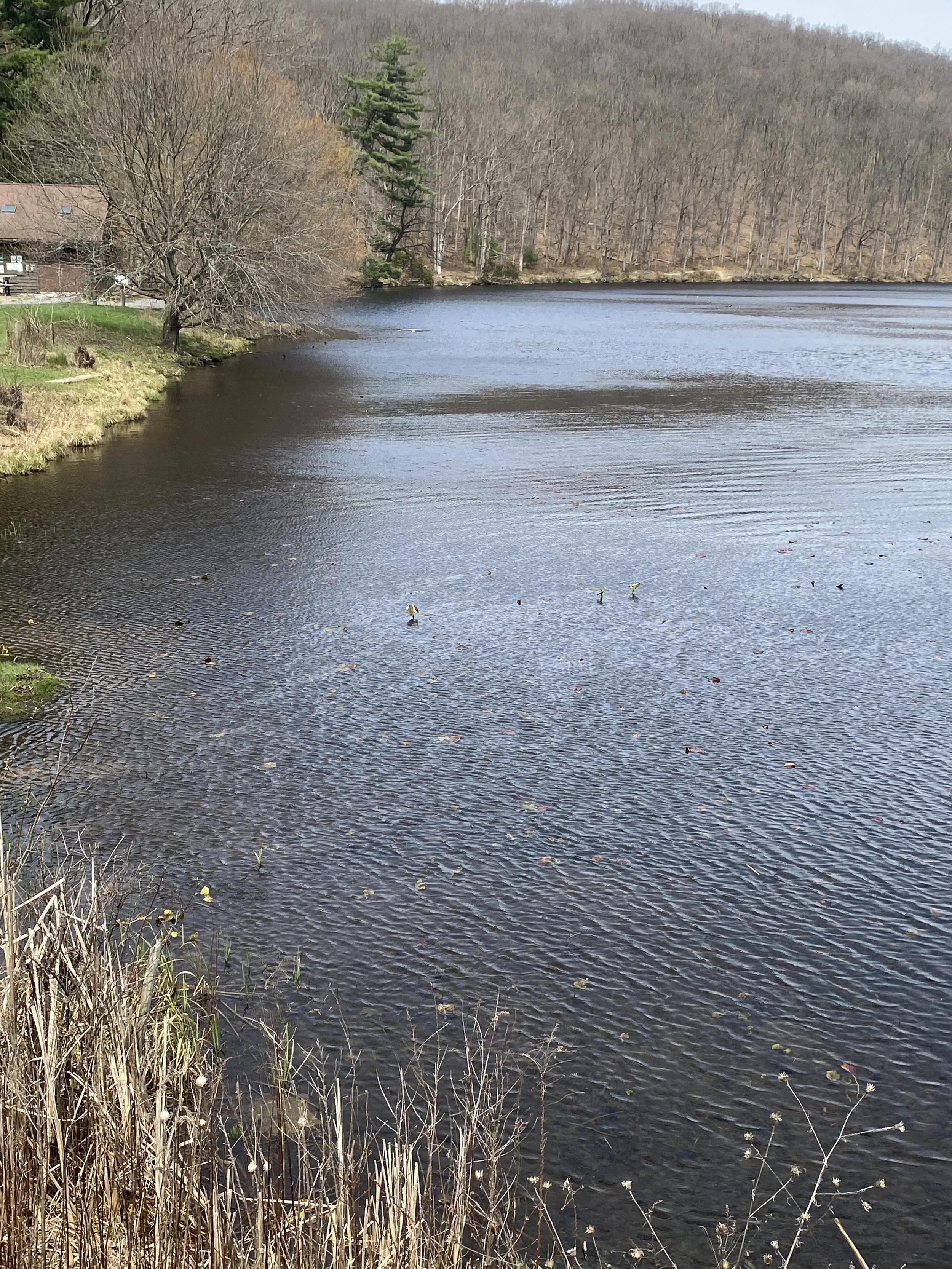
The beautiful Black Moshannon State Park before contamination begins
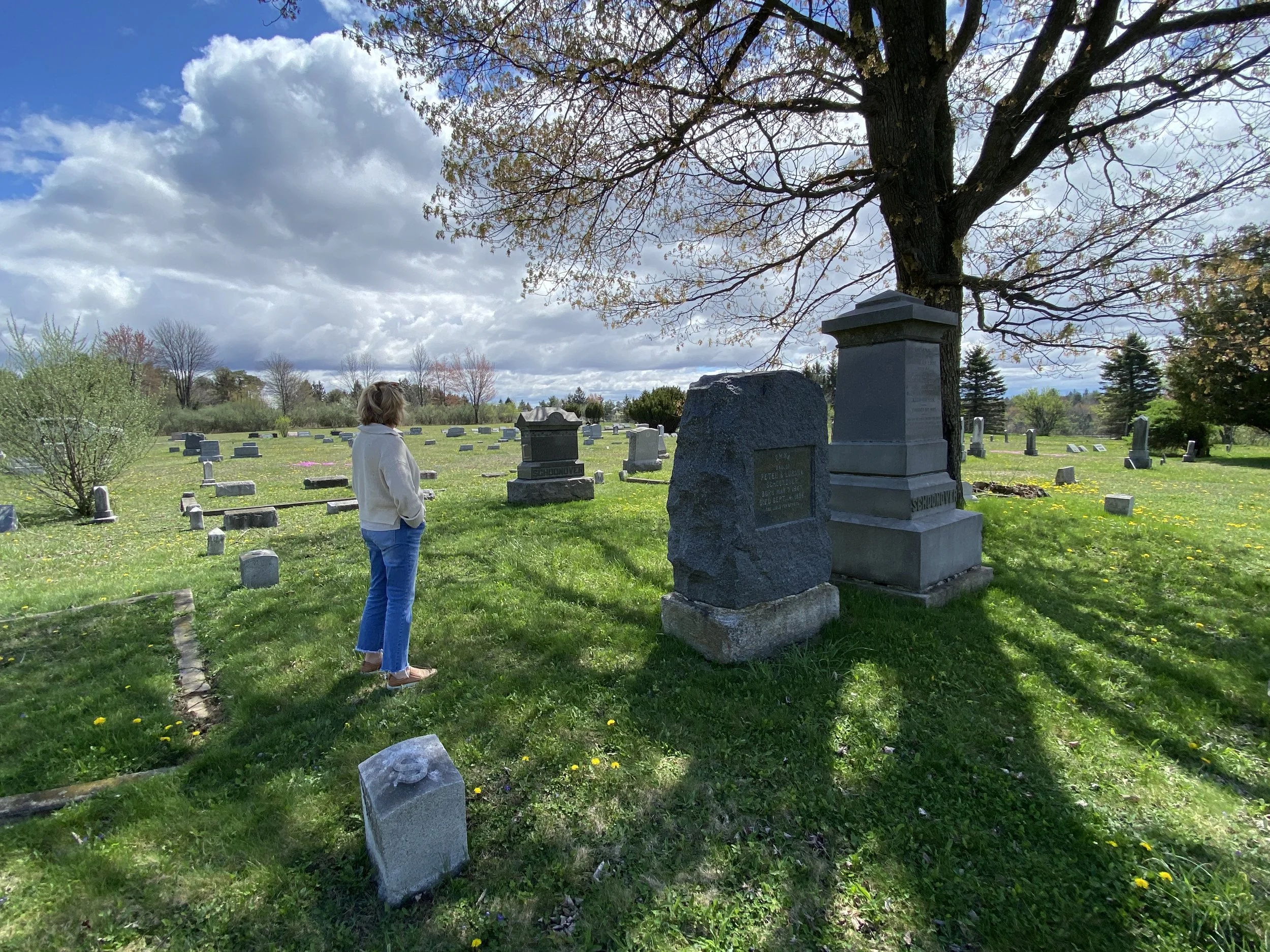
Finding my ancestors’ graves. Photo by Hekyung Parkbarr.
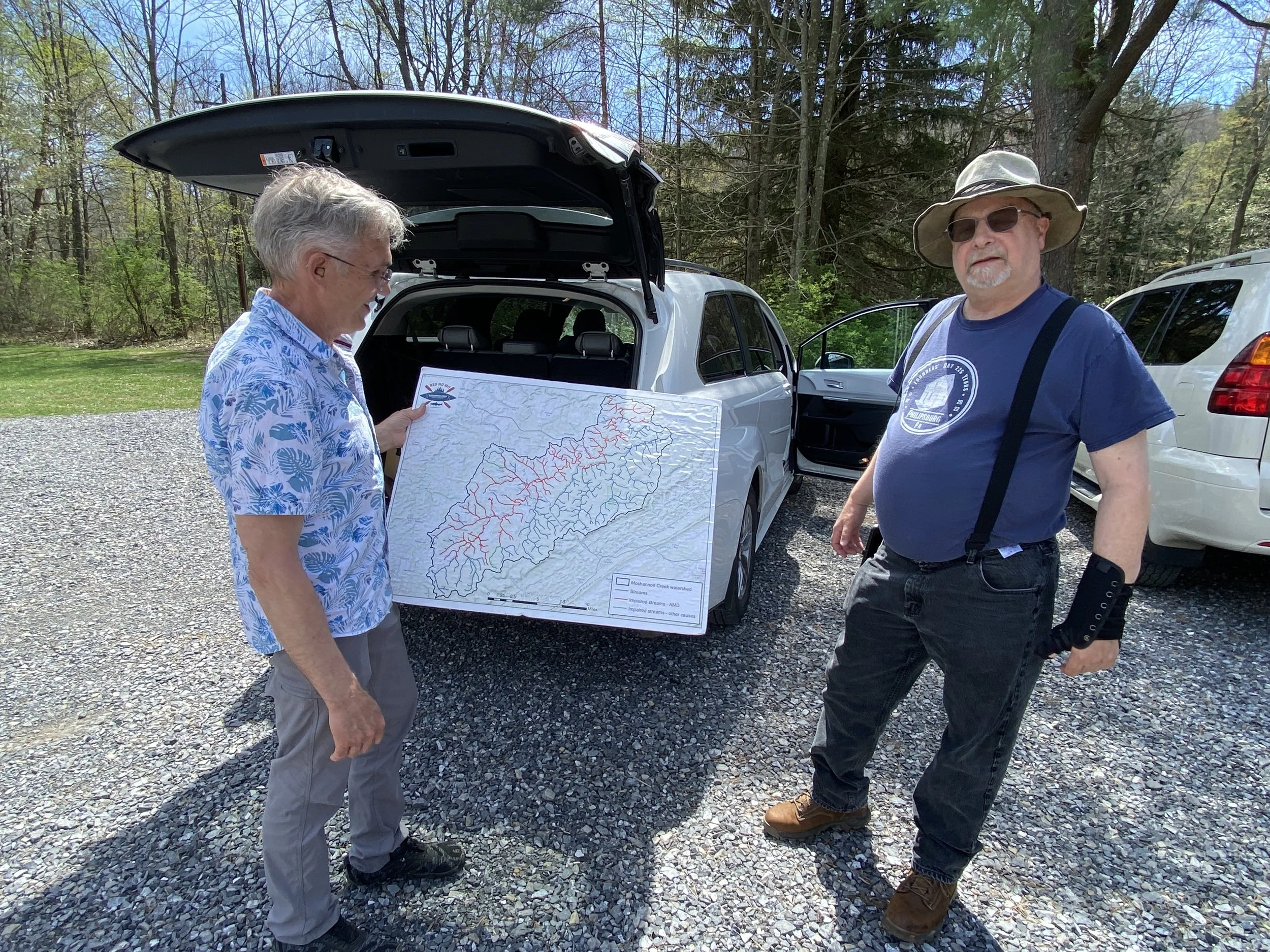
We meet Eric Skrivseth and George Franchock of the Moshannon Creek Watershed Association
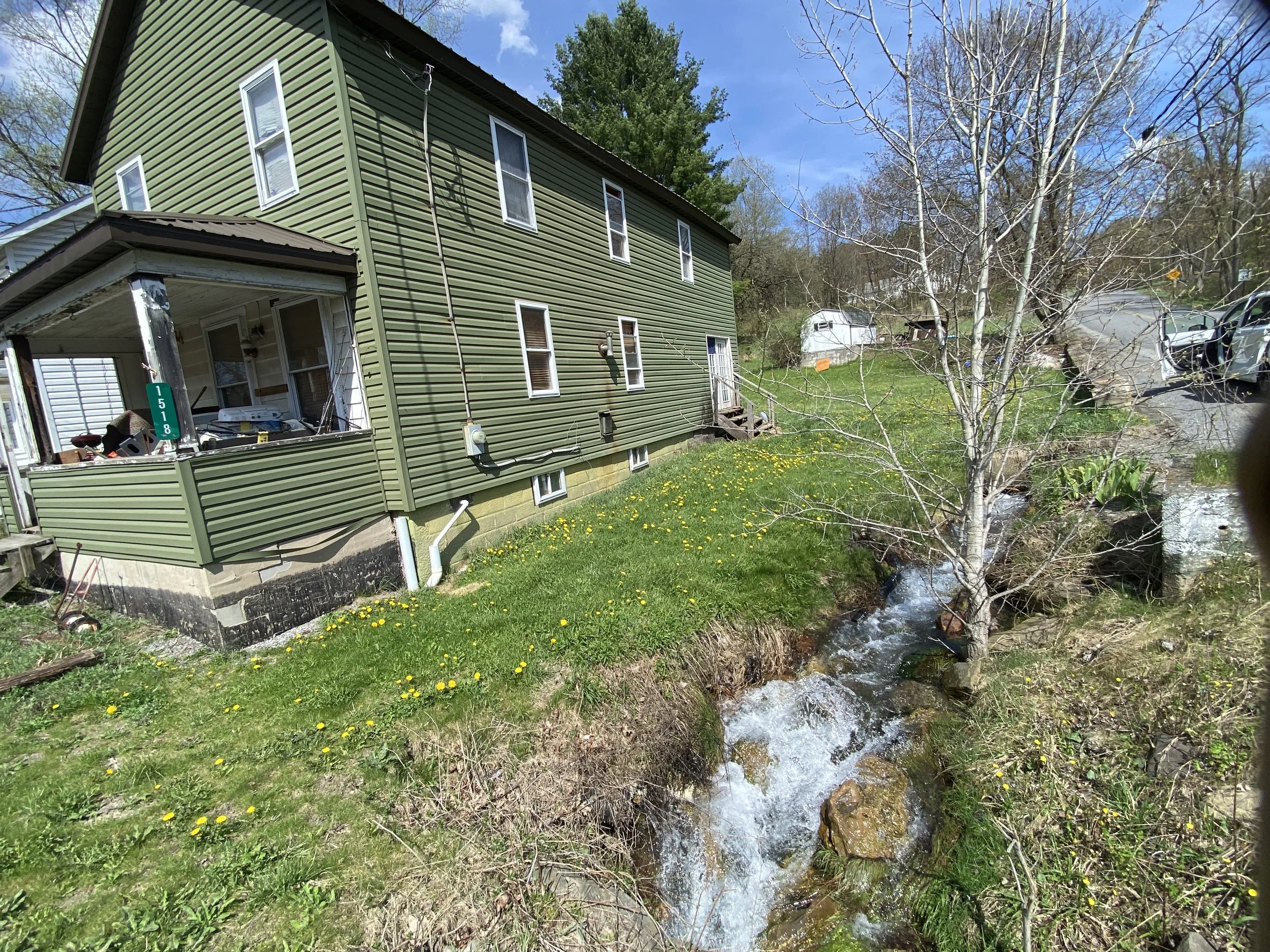
The acid mine water drains out of one-sided culverts into yards and roadside ditches
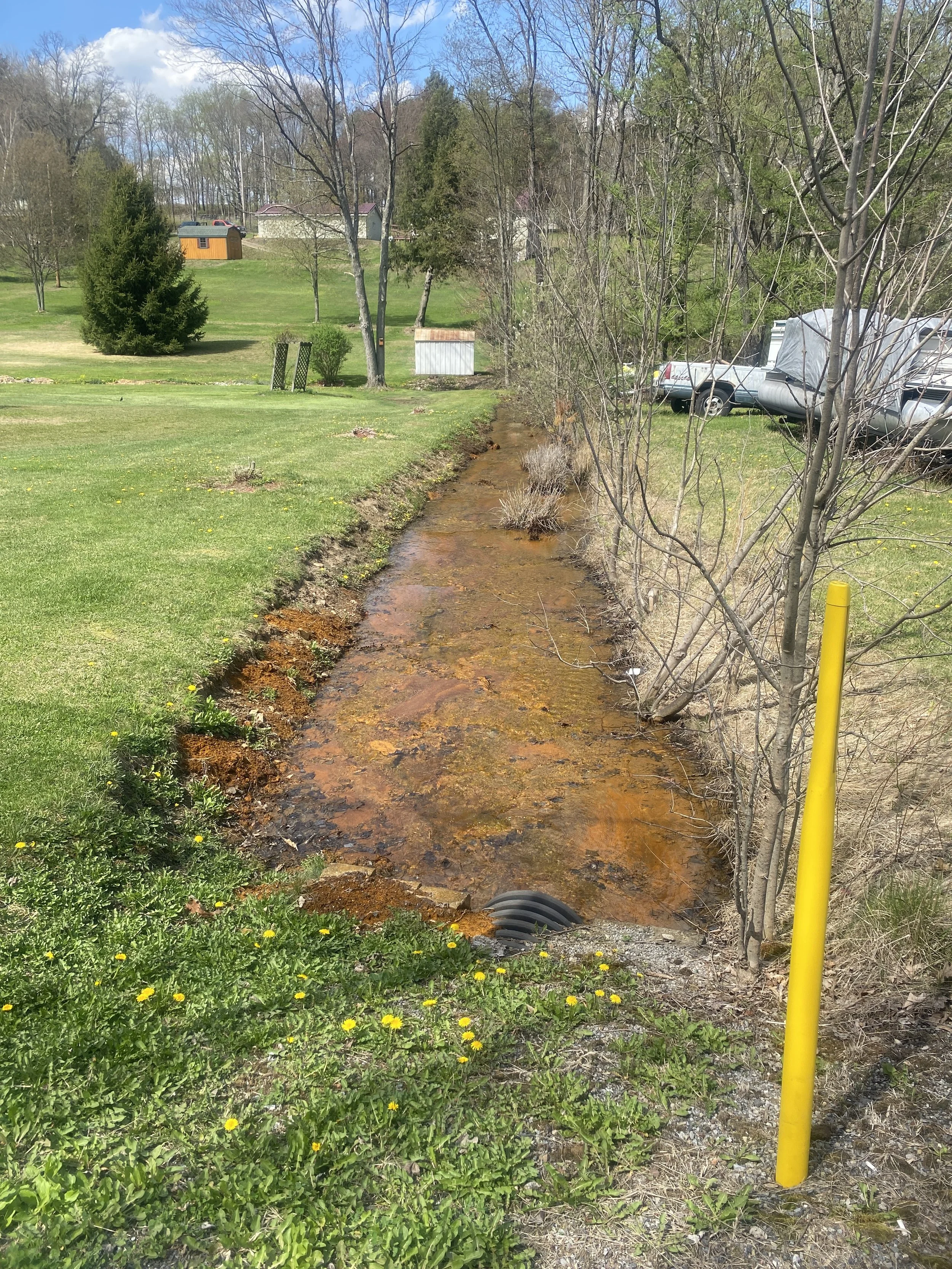
An AMD drainage ditch
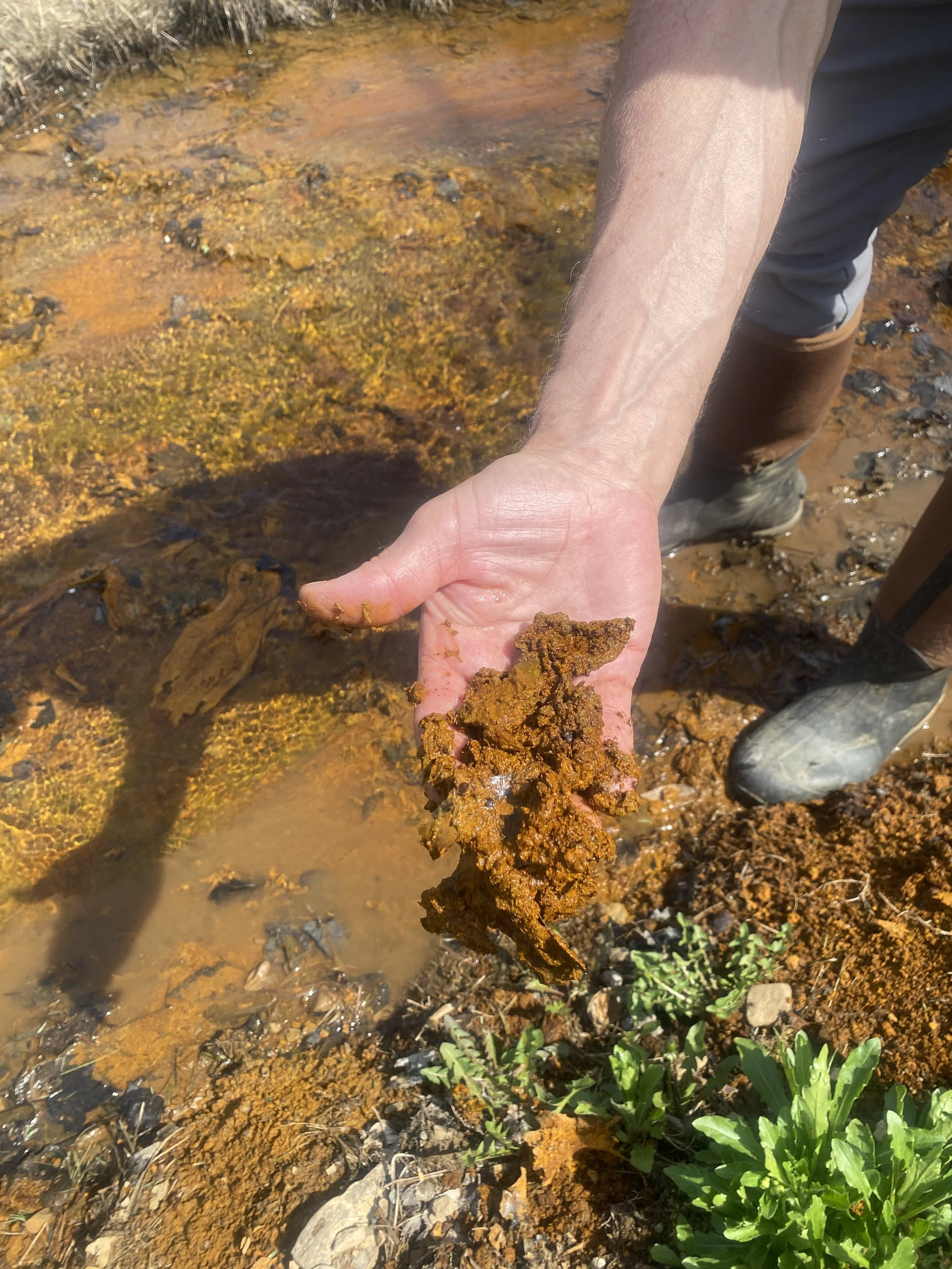
Learning about yellow boy sludge, iron oxide
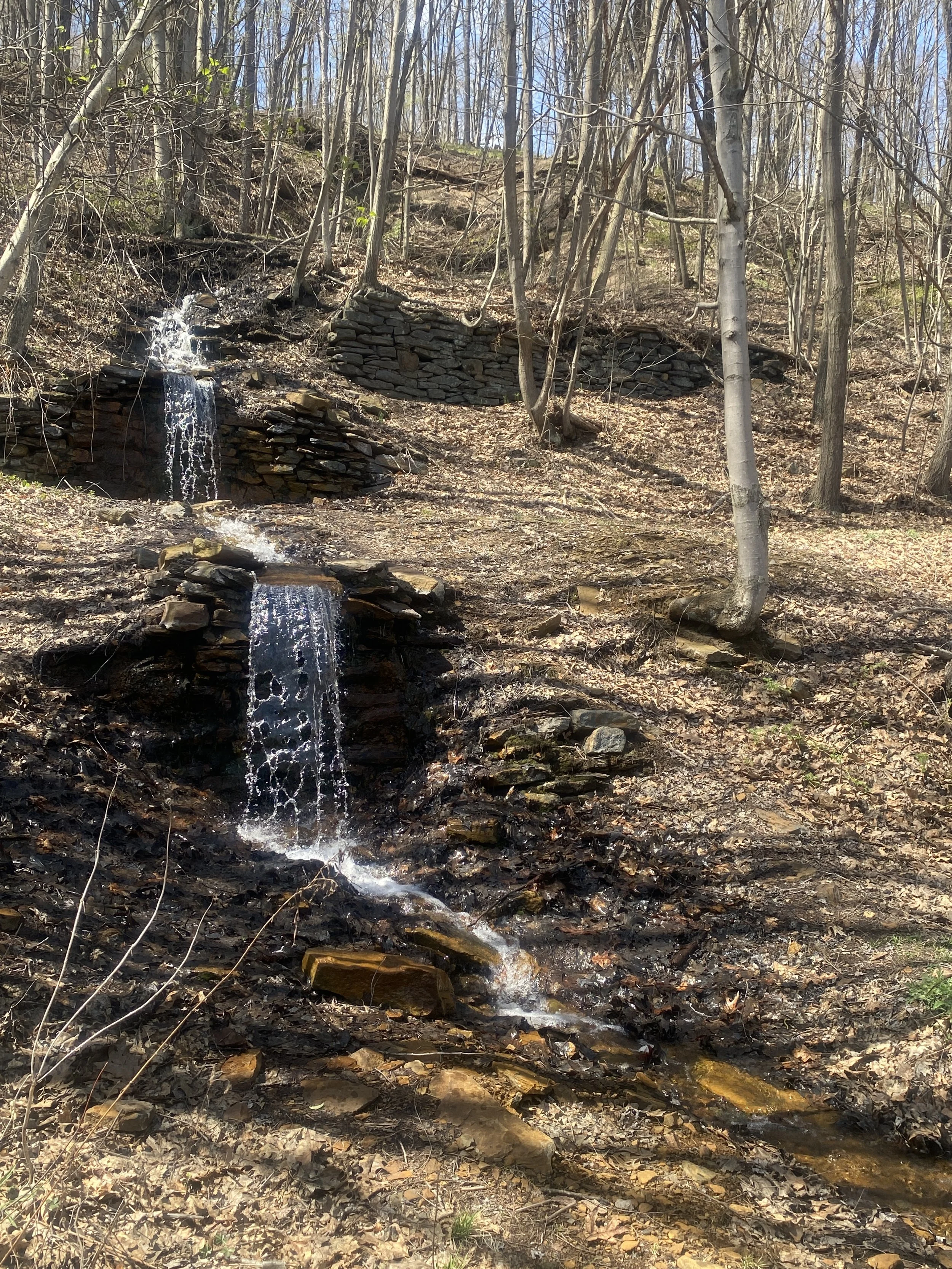
What appears to be a pristine little waterfall is actually so acidic the water cannot support life.
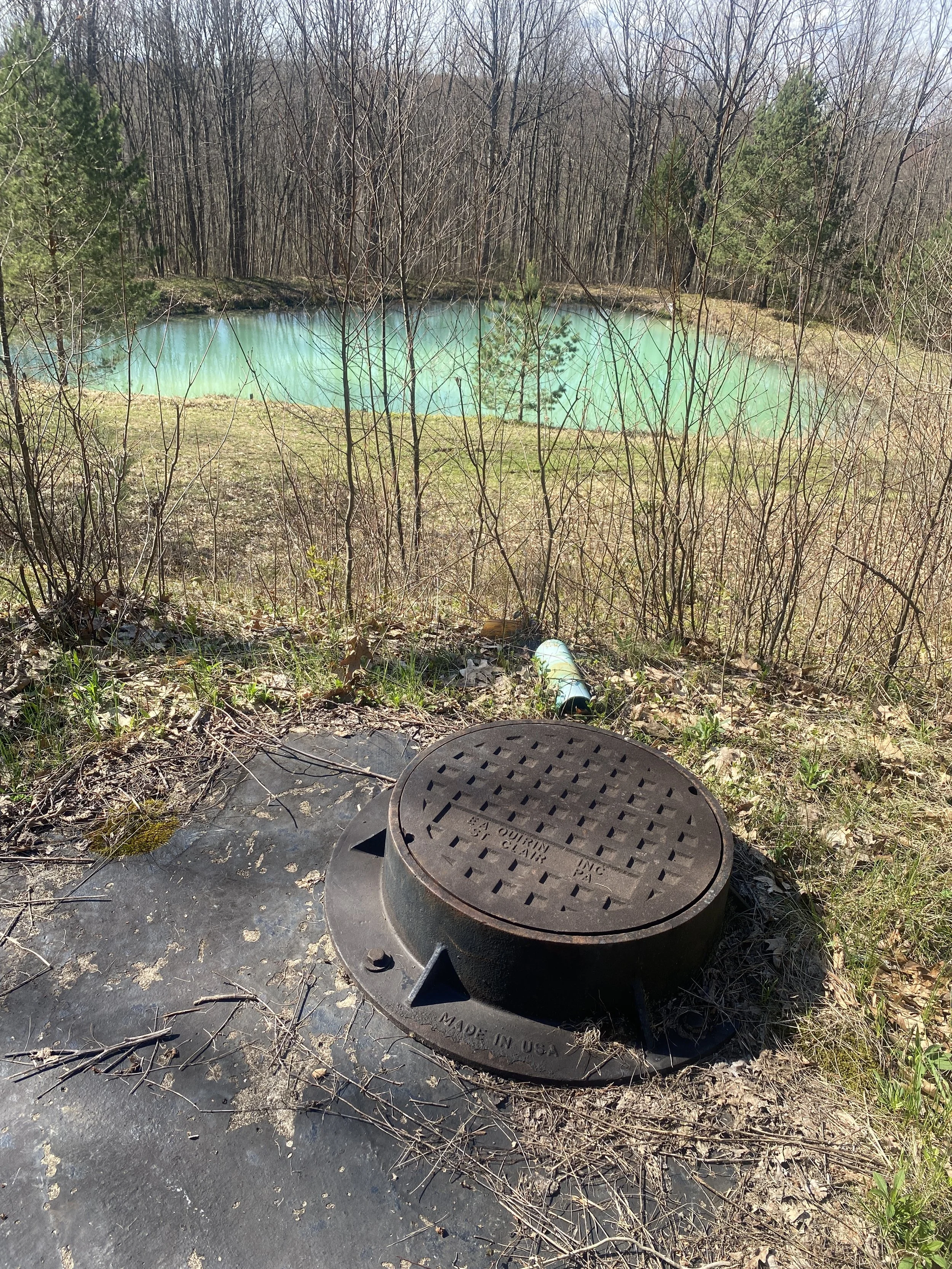
A settlement pond containing AMD heavy in aluminum—a passive treatment system
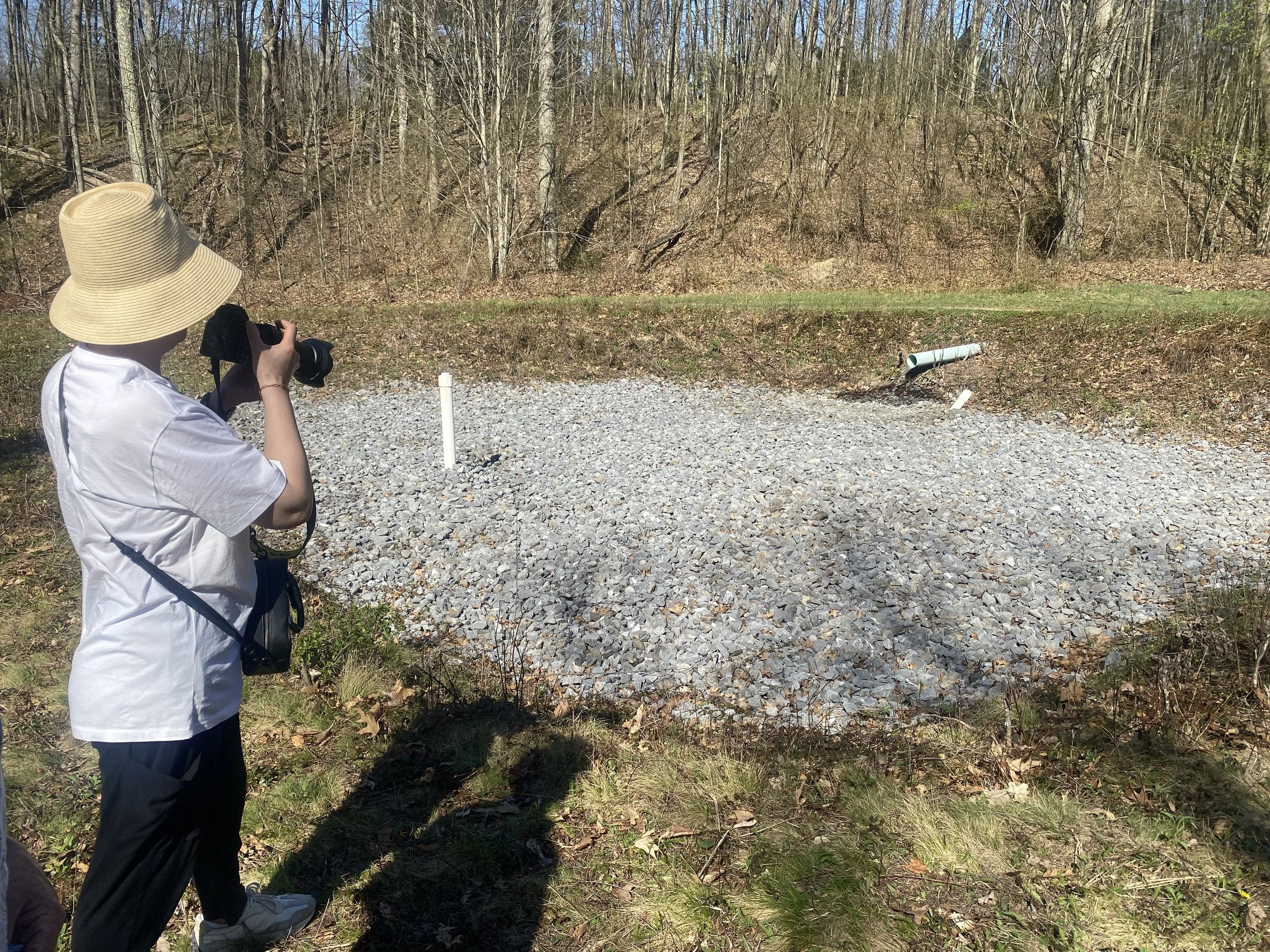
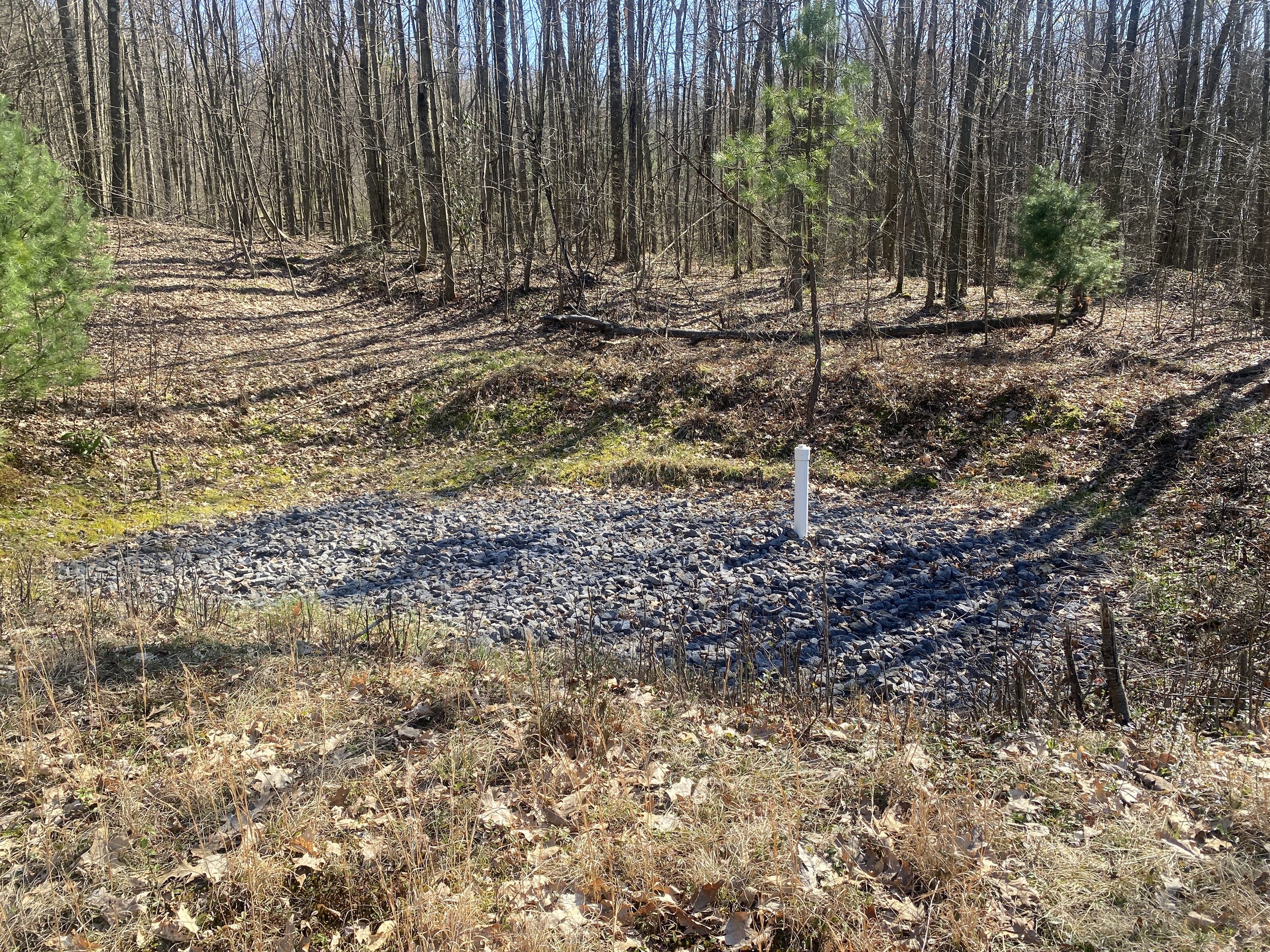
Another type of passive treatment system where the AMD is channeled through limestone which raises the alkalinity.
Second Trip to the Watershed (June 2026)
I’ve just returned from my second “pilgrimage” to Clearfield and Centre Counties, this time to collect some AMD sludge. We were privileged once again to be guided by Eric Skrivseth and George Franchock of the MCWA. Eric and George took us to the best discharge spots for this sludge, which I will attempt to use to make ochre pigments. I will continue to create drawings through 2027, eventually using the MCW acid mine discharge sourced pigment (if successful!)
Currently, the drawings are being created from AMD pigments collected from similarly affected areas in Eastern PA.
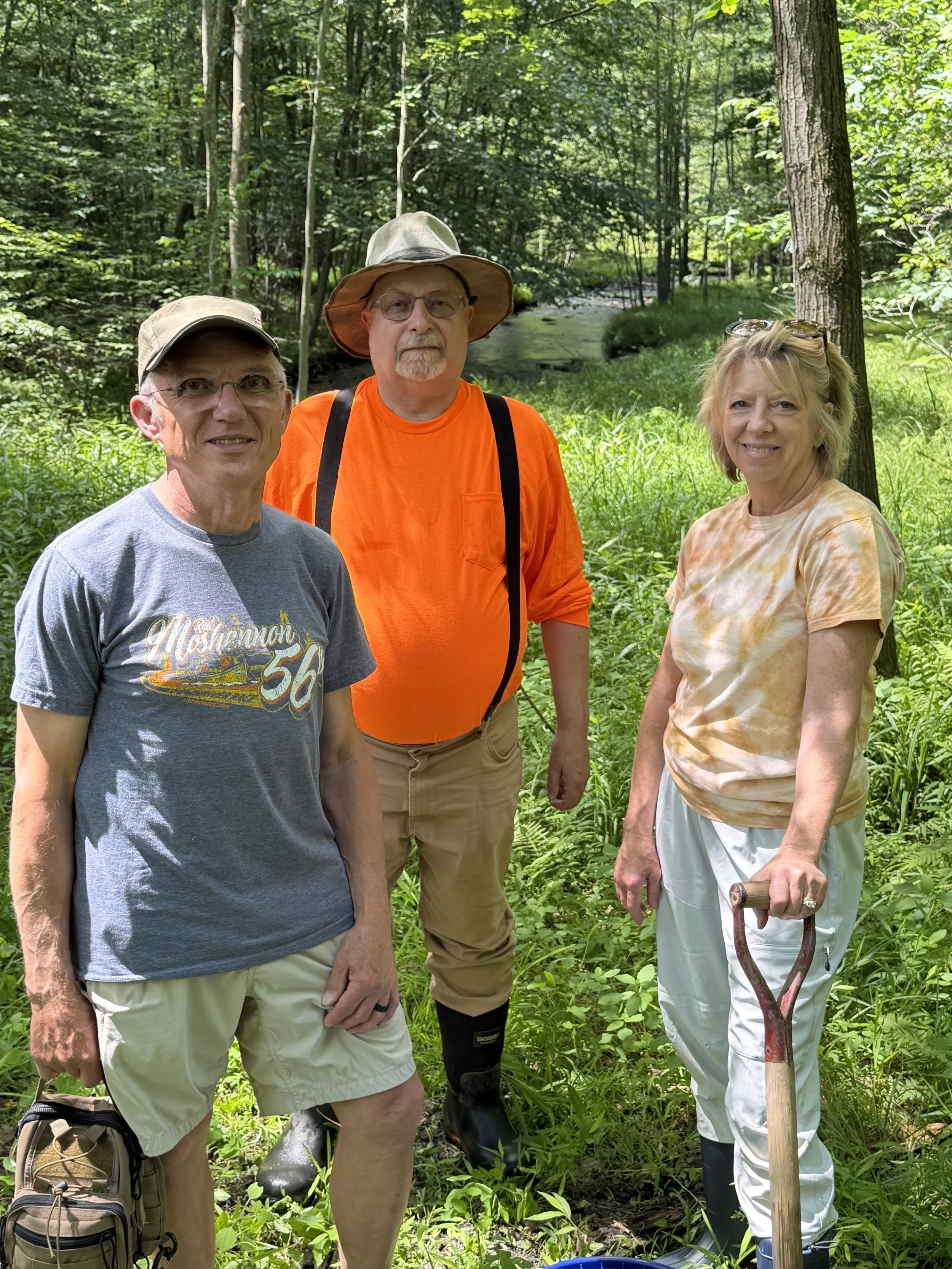
From left to right: George Franchock and Eric Skrivseth of the MCWA, and myself
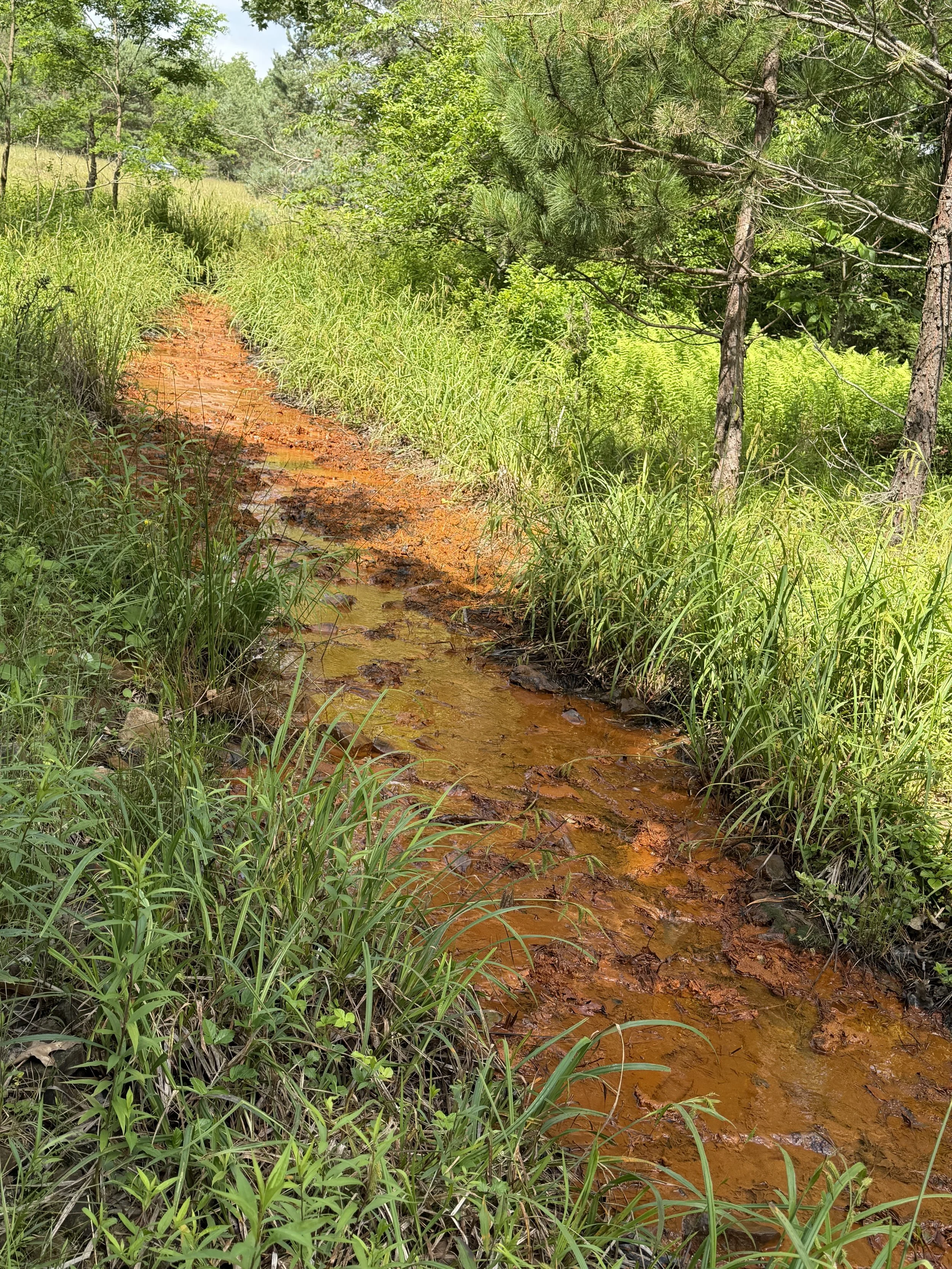
An AMD drainage ditch
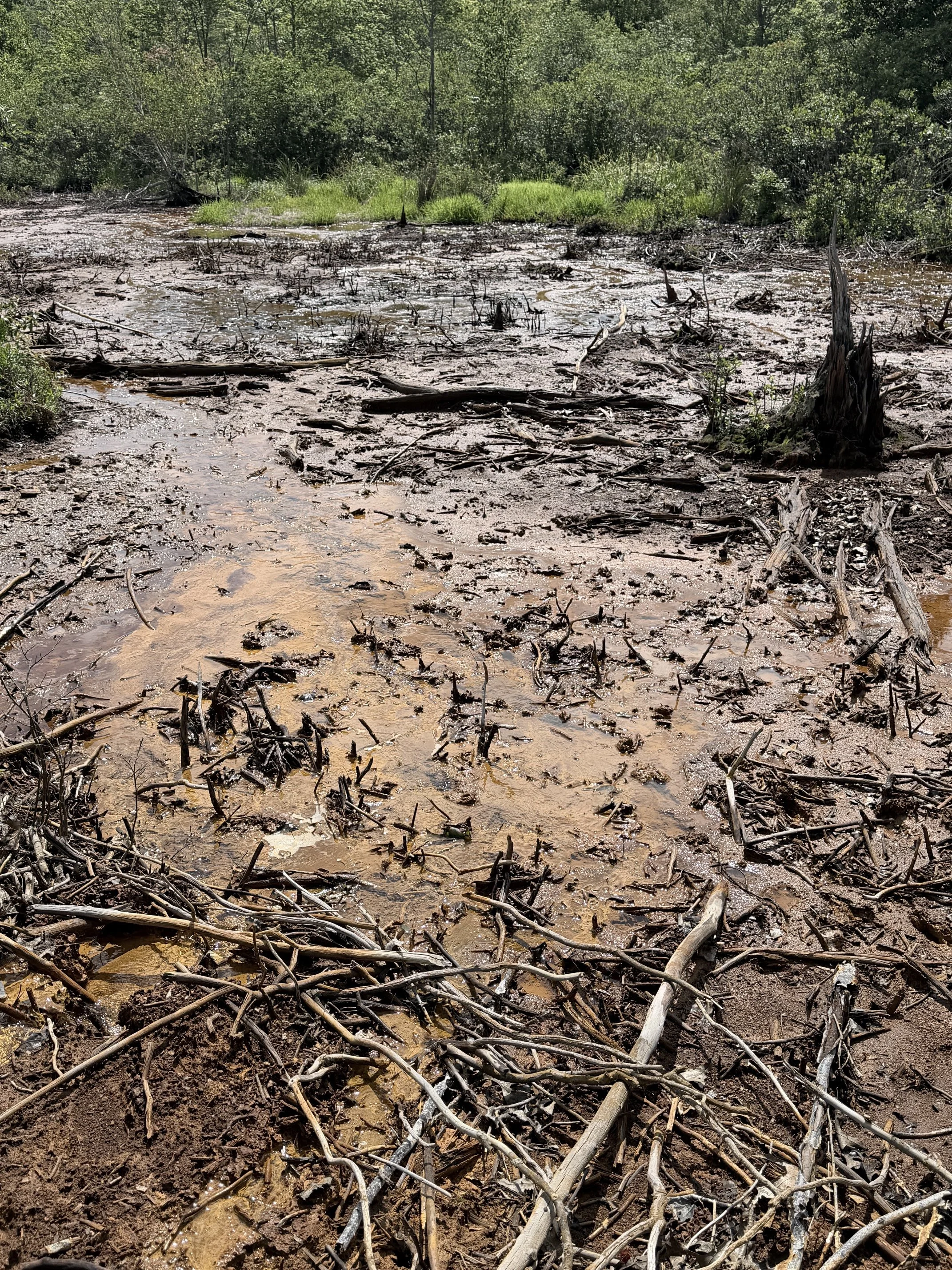
An impaired wetland
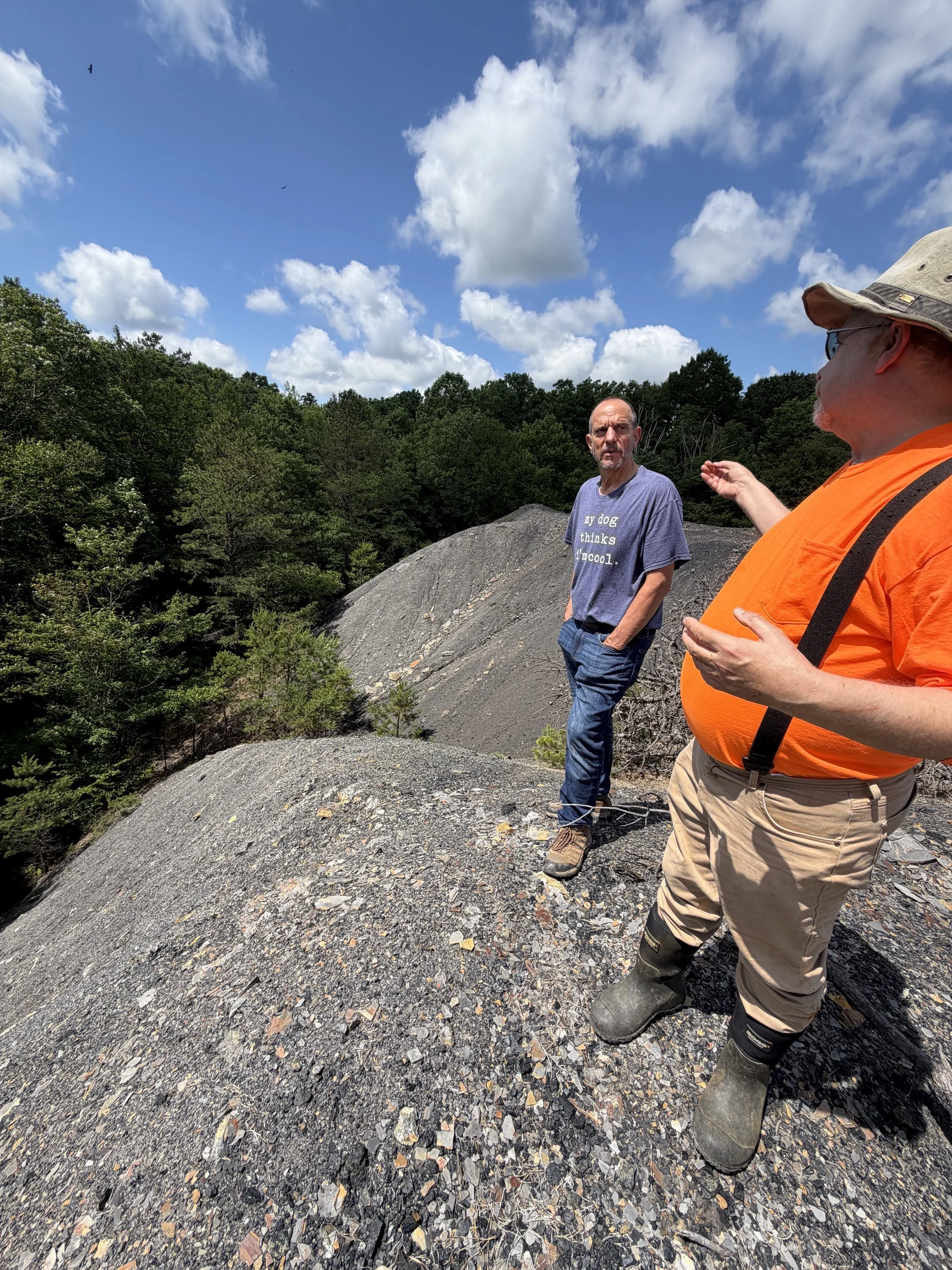
Standing atop a coal refuse pile, locally known as a “bony pile”.